
Does the gelatin trick work? Short answer: sometimes, and only in specific ways. The jiggly, slightly sweet gel can create a cool, smooth pause before eating. That pause often feels calming and structured. Many people use it to take the edge off hunger and avoid second servings.

You want the real story, not hype. Below you will get a blunt verdict, what it can and cannot do, and how most people use it. You will also see the best evidence, the major limitations, a safe 7-day self-test, and who should skip it. Finally, you will get practical alternatives if gelatin is not your thing.
Table of Contents
Does the Gelatin Trick Work? (Straight Answer)
What it can do (fullness/structure)
The gelatin trick can support appetite control for some people. It mainly works by adding a small, protein-based pre-meal ritual that slows you down. That simple structure often helps you feel fuller and make steadier choices.
- Create a short pre-meal pause that reduces impulsive bites and speeds.
- Increase perceived fullness for 30 to 90 minutes after you eat.
- Nudge smaller portions and fewer second servings at the meal.
- Reduce evening grazing when taken before dinner.
- Provide predictable structure for those who like routine before meals.
Realistic outcomes look like behavior shifts, not magic. Expect fewer snacks, calmer hunger, and a bit more control. Any scale change depends on your weekly calories, not the gel itself.
What it can’t do (fat-burning/rapid loss)
The gelatin trick does not burn fat. It does not boost metabolism or melt belly fat. It will not erase a calorie surplus or replace nutritious meals. It also will not fix emotional eating without other tools. Think of it as a small nudge for appetite, not a dramatic transformation.
- No direct fat burning or metabolism increase.
- No guaranteed or rapid weight loss.
- No replacement for balanced protein, fiber, and overall food quality.
- No solution for deeper drivers like stress or sleep loss.
Who should skip it right now? If you are in a strict medical diet phase, have swallowing difficulties, or struggle with significant reflux, consider other options. Post-bariatric patients should follow clinic guidance first. Also skip it if you suspect a gelatin allergy.
How to test it safely? Start small with half a serving or one small cube for 2 to 3 days. Do not use undiluted vinegar. Do not use it as a meal replacement. Increase only if you tolerate it well. Stop if you feel heaviness, bloating, or discomfort.
What the Gelatin Trick Actually Is (How People Use It)
Drink-before-it-sets vs cubes before meals
The trend uses unflavored or sugar-free gelatin dissolved in hot liquid. People either sip it warm before it sets or chill it into firm cubes. Both versions aim to land a small dose of protein gel before you eat, creating a structured pause and a subtle fullness boost.
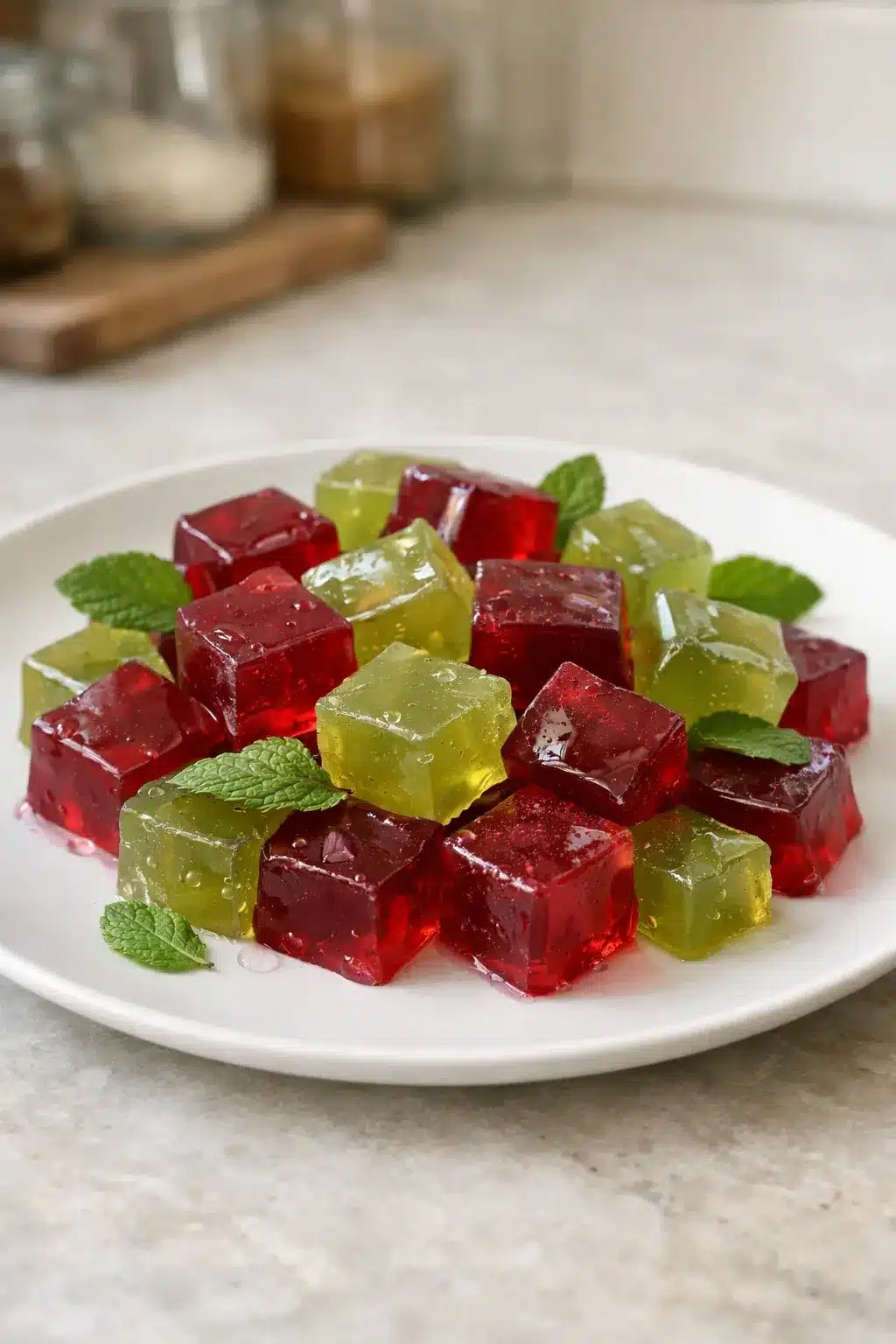
If you want to understand the ingredient itself and why it gels, review what gelatin is. Knowing the basics helps you dissolve it properly and avoid rubbery results.
The common 15–30 minute claim
Most fans take the drink or a cube 15 to 30 minutes before a meal. That timing lines up with when early fullness signals usually kick in. You can see a clear description of how the gelatin trick works, including both the warm drink and chilled cube styles.
What the Evidence Suggests (Satiety, Not Magic)
Protein/gelatin and short-term fullness
Human studies suggest gelatin can curb appetite in the short term. In one controlled breakfast study, conditions including gelatin were linked with higher satiety and reduced energy intake at a later meal. That supports the mechanism, not guaranteed fat loss. See the study showing how gelatin increases satiety.
The broader principle is consistent: protein tends to support fullness and reduce later snacking. Harvard Health summarizes that extra protein helps control hunger. Gelatin can play a similar role for some people, but it carries fewer micronutrients than whole-food proteins.
Hormone signals (GLP-1/insulin) as a plausible pathway
A small human study found that a gelatin meal can raise satiety-related hormones. The observed increases in GLP-1 and insulin responses suggest a plausible fullness pathway. That is interesting physiology, but it is not proof of long-term weight loss. Think mechanism support, not outcome guarantee.
What’s Unproven or Overhyped
Why viral ‘metabolism’ claims don’t hold up
Many clips promise a “metabolism hack.” That promise does not match the data. The gelatin trick primarily supports appetite and portion control, not resting metabolic rate. Any weight change comes from consistently eating fewer calories than you burn.
For context about the trend and realistic expectations, see our honest explainer on the gelatin diet trick. It separates the practical ritual from the glittery promises.
Why add-ons (ACV/pink salt/juice) don’t equal better results
Some versions add apple cider vinegar, pink salt, or juice. These add-ons do not make it a better “metabolism” play. They mainly change flavor or add sugar or sodium. Vinegar can also aggravate reflux or irritate your throat and teeth.
Keep it simple. If you like a hint of flavor, use diluted citrus, tea, or non-caloric sweeteners if they agree with you. But do not assume add-ons unlock extra fat loss. The core effect, if any, is gentle fullness and structure from gelatin.
How to Test It for 7 Days (Simple, Measurable Plan)
Exactly what to do each day
Pick one main meal each day, ideally lunch or dinner. Use the gelatin trick before that meal for one week. Keep the rest of your routine as steady as possible.
- Prepare a small gelatin drink or chill a batch into bite-size cubes.
- Take one small serving 15 to 30 minutes before your chosen meal.
- Eat your normal foods at the meal. Do not compensate or “diet harder.”
- Hold exercise, sleep, and hydration steady to reduce confounding variables.
- After 2 to 3 days, adjust the serving slightly only if needed and tolerated.
- Do not use undiluted vinegar. Do not replace meals with gelatin.
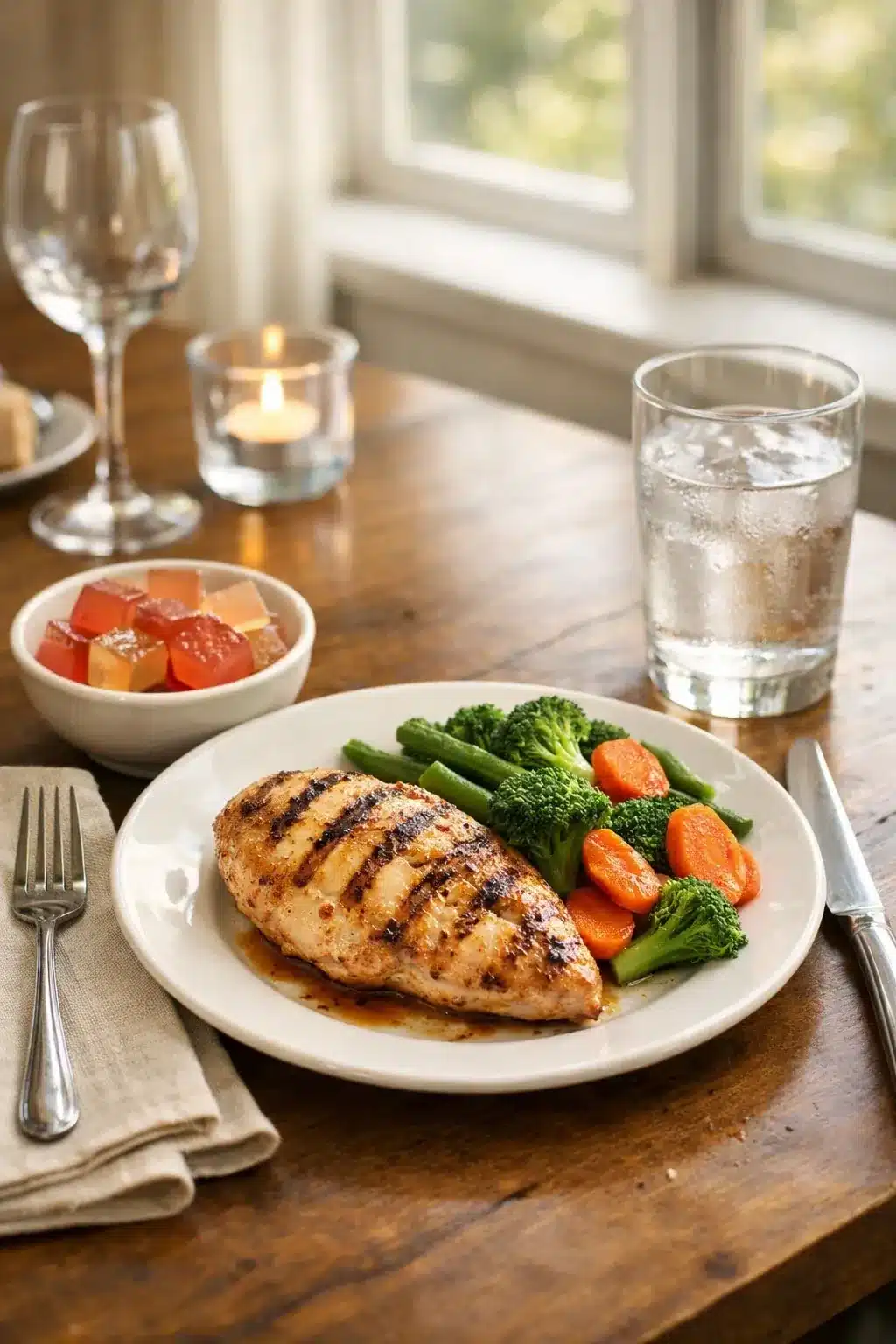
For exact ratios, flavors, and methods, follow our step-by-step gelatin trick recipe. It covers warm drinks, firm cubes, and safe variations.
What to track (hunger, portions, snacks, tolerance)
- Hunger ratings: Before the meal and 30 minutes after, use a 0 to 10 scale.
- Portions: Note plate size, seconds taken, or specific bites left uneaten.
- Snacks: Record afternoon and evening snacks, especially post-dinner grazing.
- Timing: Note if you naturally delay the first bite or slow your pace.
- Tolerance: Track bloating, heaviness, reflux, gas, or bathroom changes.
- Weight trend: Optional weekly average at day 1 and day 8, not daily swings.
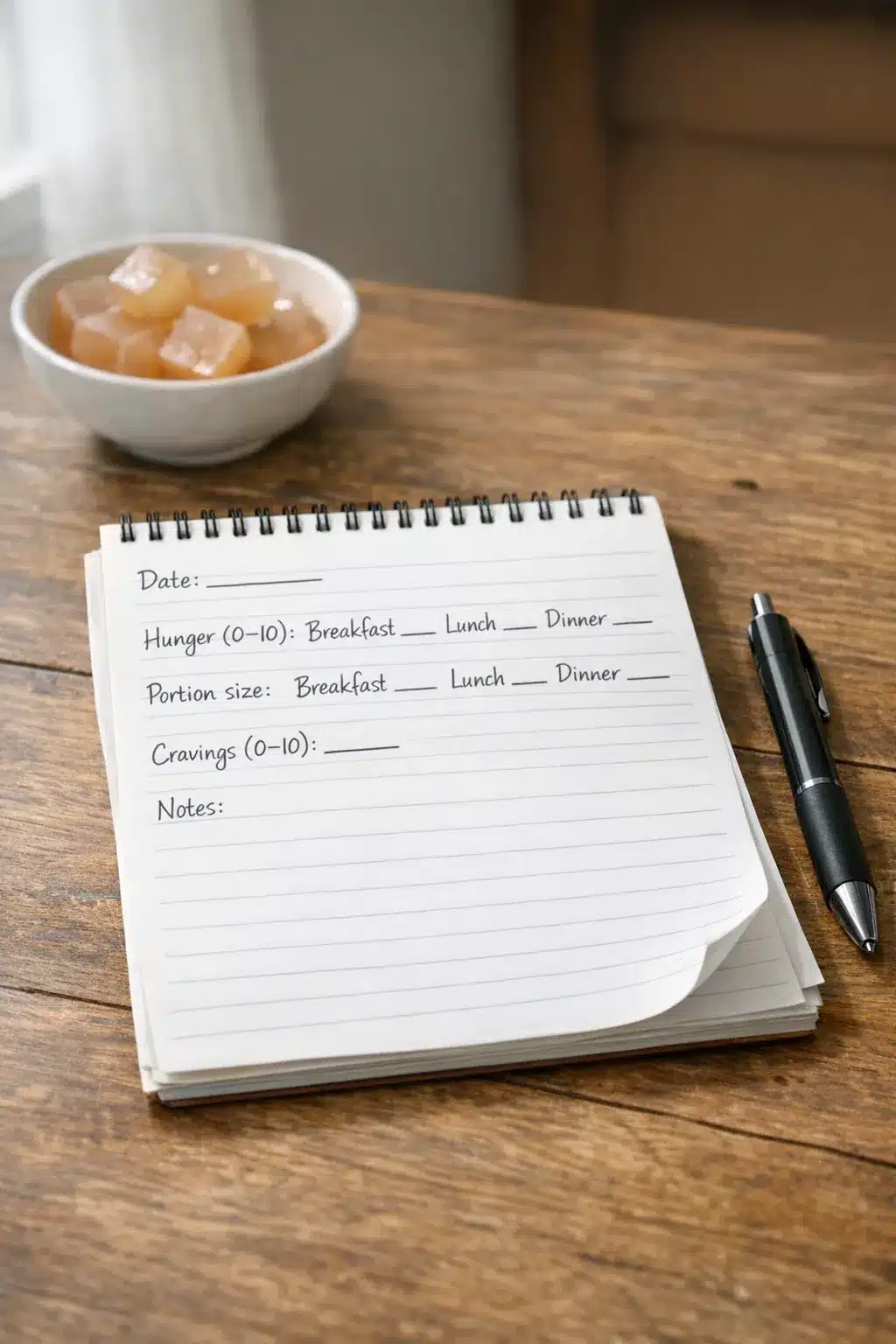
Look for behavioral changes first. The earliest “gelatin trick results” are fewer snacks, smaller portions, and calmer hunger. Any scale shift will reflect your total calories over one to two weeks.
Who Should Avoid It (and Common Side Effects)
Bariatric, reflux, sodium restriction, medical diets
If you are early post-bariatric, follow your clinic’s staged plan and skip this trend for now. If you have frequent reflux, vinegar versions can sting and worsen symptoms. If you are on sodium restriction, skip salted mixes. Anyone with swallowing problems should avoid firm gels and choose safer strategies.
Digestive reactions like bloating, heaviness, or heartburn are possible. Allergies are rare but serious. Review the safety-first overview of gelatin trick side effects before trying it, especially if you take medications or manage kidney issues.
When to stop and talk to a clinician
Stop immediately if you notice persistent abdominal pain, nausea, or reflux flare-ups. Also stop if you experience rash, swelling, or breathing changes. Seek care for any signs of an allergic reaction.
Consult your clinician if discomfort persists beyond a few trials, if you have complex medical nutrition needs, or if you are recovering from surgery. The trick is optional. Your health plan comes first.
Better Alternatives If You Hate Gelatin
Protein + fiber meal upgrades that target the same goal
You can target the same appetite mechanism without gelatin. Focus on protein and fiber, plus a small pre-meal pause. These upgrades are simple and satisfying.
- Front-load protein: eggs, Greek yogurt, cottage cheese, tofu, or lean meats.
- Add fiber: beans, lentils, vegetables, berries, oats, or chia pudding.
- Use a pre-meal ritual: a small apple with nuts or a vegetable soup cup.
- Plate smart: fill half the plate with high-fiber produce, then add protein.
- Hydrate: drink water or unsweetened tea 10 to 20 minutes before eating.
- Start with a protein-forward breakfast to steady hunger later in the day.
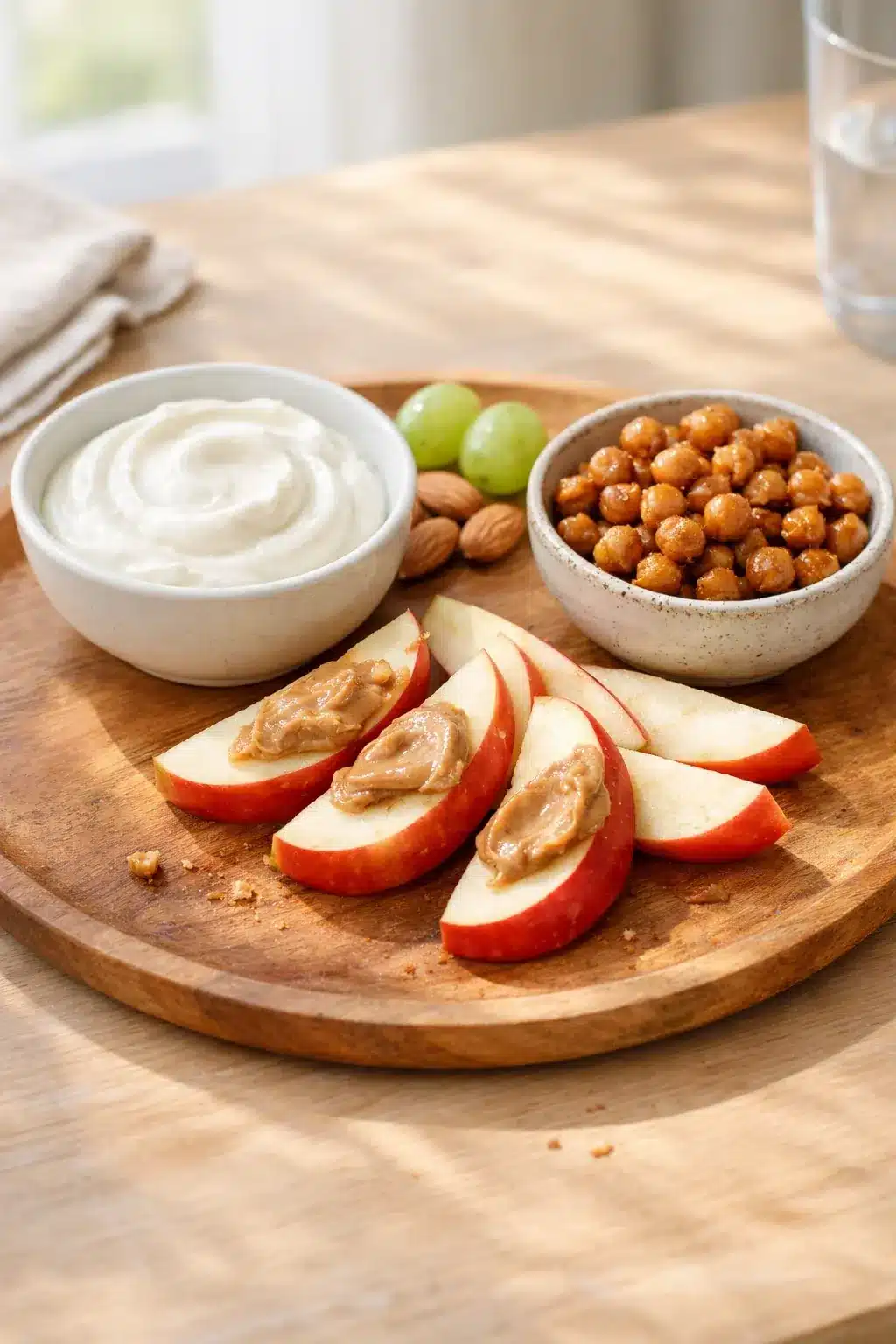
These strategies deliver the same intent as the gelatin trick for weight loss does it work debates: more fullness, better portions, and fewer grazing episodes. Many people find they prefer these food-first options over gels.
FAQ
Does the gelatin trick work for weight loss?
It can help some people indirectly by supporting fullness and reducing overeating, especially when used 15–30 minutes before meals. It does not directly burn fat. Any weight loss would come from consistently eating fewer calories because you feel satisfied sooner.
What does the science say about gelatin and appetite?
Research suggests gelatin (as a protein source) can increase satiety and may reduce subsequent food intake in the short term compared with some other proteins, but this doesn’t prove long-term weight loss on its own. It supports the ‘fullness’ mechanism, not a guaranteed scale change.
How long until you see results from the gelatin trick?
If it helps, the earliest change is usually behavioral: fewer snacks, smaller portions, less grazing, and calmer hunger within a few days. Scale changes depend on your total weekly calorie intake and can be subtle.
Is the gelatin trick better than just eating protein at meals?
Not necessarily. Many people can get similar appetite benefits by increasing protein and fiber in meals. The gelatin trick mainly works as a structured pre-meal ritual that may reduce impulsive eating.
Can the gelatin trick replace a meal?
No. It should not replace meals. Using it as a meal replacement can reduce nutrient intake and backfire with rebound hunger later.
Does adding apple cider vinegar or pink salt make it work better?
No reliable evidence shows those add-ons boost weight loss. They may change taste, and vinegar can bother reflux/teeth. The core effect if any is fullness/structure from gelatin as a protein gel.
Who should avoid trying the gelatin trick?
Anyone with a medical diet plan, swallowing difficulties, significant reflux (if using vinegar), sodium restriction (if using salt), or post-bariatric surgery patients unless their clinical team approves.
Conclusion
The gelatin trick can be a helpful pre-meal ritual for appetite control, but results hinge on your overall habits. If you want more ideas for simple, satisfying meals and swaps, browse my Pinterest boards for inspiration you can use right away.