
What is gelatin? Think silky panna cotta, bouncy gummies, and glossy fruit jelly. Gelatin transforms simple liquids into clean, sliceable gels with a tender wobble. It gives glazes shine, mousses body, and cheesecakes a perfect, creamy hold. Learn how it behaves and you gain restaurant-level texture at home. Your desserts slice neatly, release from molds, and keep their shape. With a few rules, gelatin becomes the quiet tool behind showstopping treats.
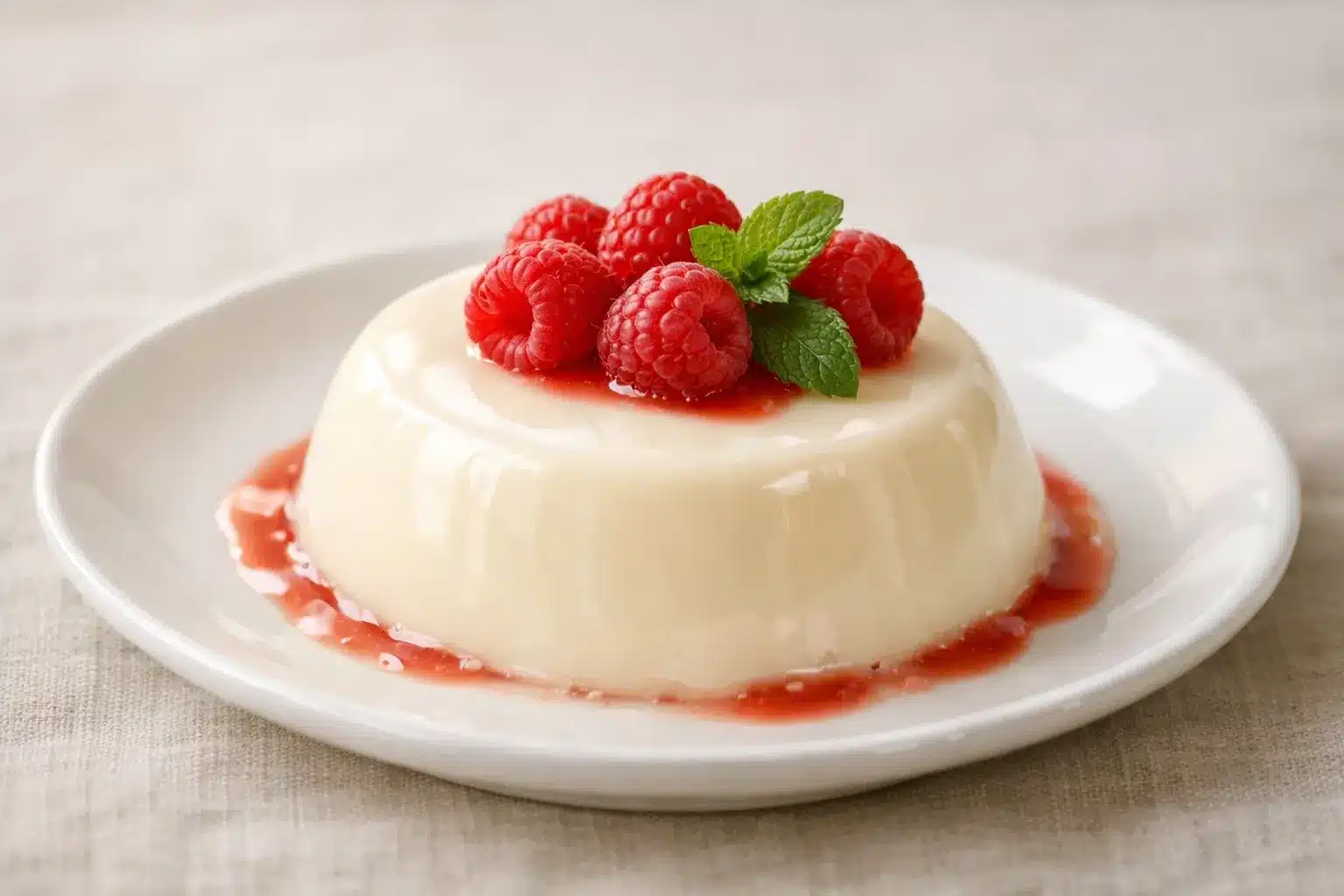
Here you will get cook-first answers in plain language. We define gelatin from collagen and note its exact sources. Then we cover forms you can buy, bloom strength, and the simple set workflow. You will learn how to bloom gelatin, dissolve it safely, and chill it to perfection. We will share reliable ratios and conversions, plus quick troubleshooting. By the end, you will know what to buy, how much to use, and why it works.
Table of Contents
What Gelatin Is
Gelatin is a natural protein obtained by gently processing collagen from animal connective tissue. In a kitchen, it swells in cold liquid, dissolves with gentle heat, and forms a gel as it cools. That gel is reversible, so it softens again when warmed.
For a quick, authoritative gelatin definition, see the industry overview on gelatin definition. It explains that gelatin is not a carbohydrate or starch. It is protein, and its gelling ability comes from collagen-derived chains forming a network as they cool.
Because gelatin is animal-derived, it is not vegetarian or vegan. If you need a plant-based set, use agar, carrageenan, or pectin in recipes designed for those ingredients. We cover this more in the comparison section below.
A Collagen-Derived Protein
In animals, collagen supports skin, bones, and connective tissue. When producers partially hydrolyze collagen, its long triple-helix strands unwind. Those shorter protein chains are gelatin. They hydrate in water, then re-associate on cooling to create structure.
This reversible network is why gelatin can be melted and reset repeatedly. It is also why the gel feels springy and clean on the tongue. You are tasting a protein matrix, not a starchy thickeners grain.
Where Gelatin Comes From
Commercial gelatin comes from edible animal by-products that are already approved for the food supply. Reputable producers follow strict traceability and hygiene steps during extraction, filtration, and drying. You can learn how those raw materials become finished product in this overview of gelatin manufacturing.
Labels can also tell you which animal a product uses. Some brands indicate porcine, bovine, or fish. If you have dietary or religious needs, choose appropriate sources and certification. For a buyers overview, see our guide to reading labels and typical gelatin sources.
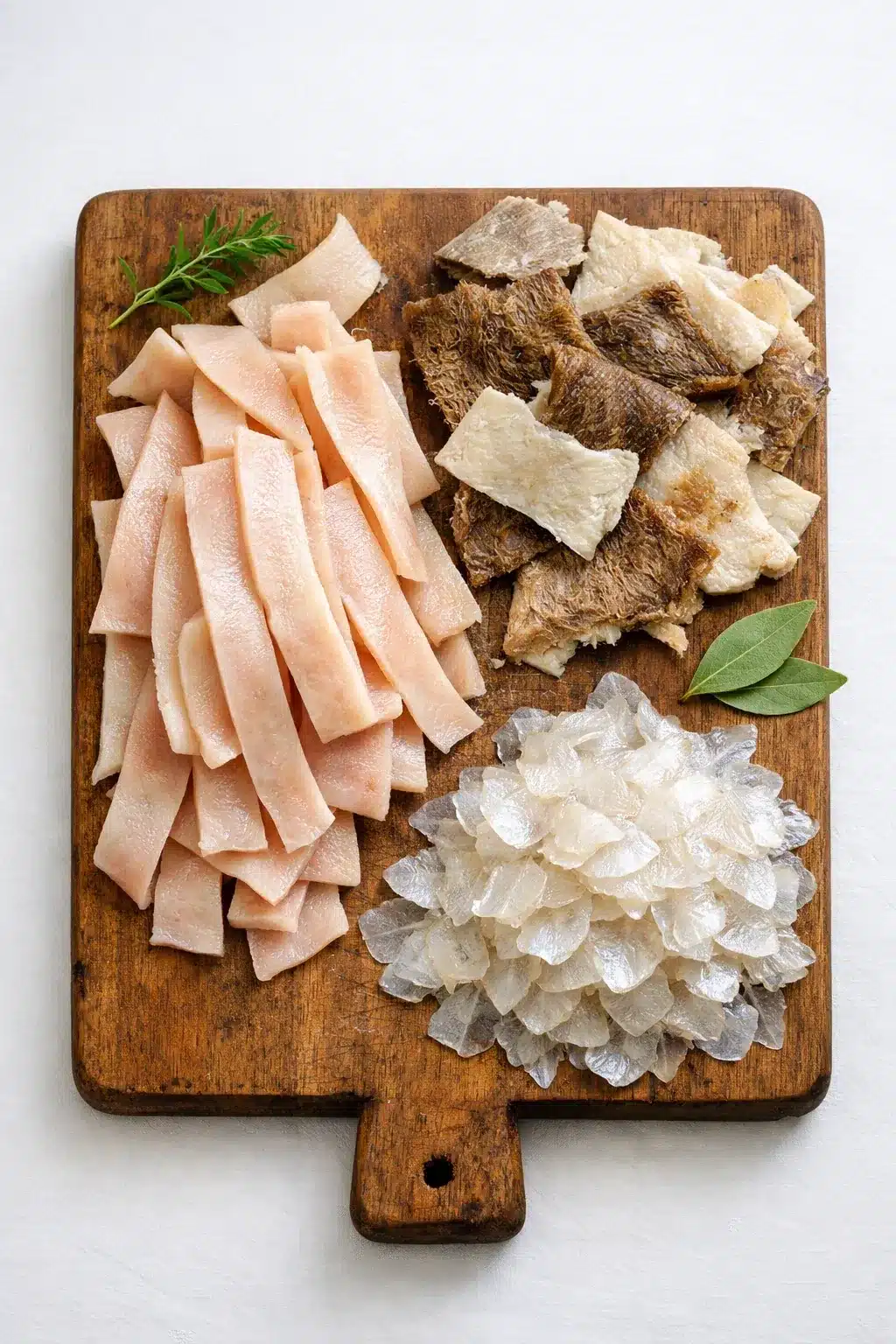
Common Animal Sources
- Pigskin (porcine) often used due to availability and consistent quality.
- Bovine hides (beef) common for kosher and halal-certified options.
- Demineralized bones used for both porcine and bovine gelatin production.
- Fish and chicken selected for specific dietary needs and labeling preferences.
All of these raw materials come from animals approved for human consumption. Producers process them specifically for culinary and food applications. If you avoid a given species, buy accordingly.
Forms of Gelatin You Can Buy
Home cooks most often see powdered gelatin and sheet (leaf) gelatin. Both give crystal-clear gels and delicate wobble when used correctly. You may also find instant gelatin, which hydrates faster but still needs careful handling.
Powdered or Granulated Gelatin
Powdered gelatin is fine granules packaged in packets or tubs. In the United States, a typical packet holds about 2 1/4 to 2 1/2 teaspoons, roughly 7 grams. You measure it by weight for precision or by packet for convenience.
Powder hydrates fastest when sprinkled evenly over a cold liquid. After the grains swell, you warm the mixture gently until it clears. Powder is easy to distribute in batters, dairy bases, and fruit juices.
Curious how powdered and sheets compare in practice? Our short comparison of leaf vs powder shows how they prepare and convert reliably between forms.
Sheet or Leaf Gelatin
Sheet gelatin is thin, clear leaves that you count by the piece. Leaves come in bronze, silver, gold, and platinum grades. The grades differ in weight per sheet but are standardized so that equal numbers of leaves give similar set.
To use sheets, soak them in cold water for about 5 minutes. Then lift them out, squeeze out excess water, and add them to warm liquid to dissolve. The method feels hands-on and gives a very clear gel.
Instant Gelatin
Some brands sell instant gelatin designed to hydrate quickly without a long bloom. It can be helpful for cold-process recipes or fast mixes. You should still avoid overheating and always verify label instructions.
Do not confuse instant gelatin with instant clear jel or other starch thickeners. Those are modified starches, not proteins, and they gel differently with a distinct texture.
Bloom Strength and Why It Matters
Bloom strength is the standard measure of how firm a gel is under test conditions. Higher bloom numbers mean stronger gels, so you need less gelatin for the same firmness. Typical retail gelatin ranges from about 125 to 250 bloom.
Matching bloom between brands helps you hit the same texture every time. When bloom differs, you adjust the amount slightly. That way, a panna cotta stays creamy-soft while a fruit jelly slices neatly.
How Bloom Is Tested
Manufacturers prepare a standard gelatin gel, then press a plunger into it to measure force. That measured force, in grams, is the bloom value. For a brief technical explainer, see the jelly bloom test.
How Gelatin Sets
Gelatin sets through a simple workflow. First it hydrates in cold liquid. Then it dissolves with gentle heat. Finally it cools so the protein chains can re-form junctions and create a network.
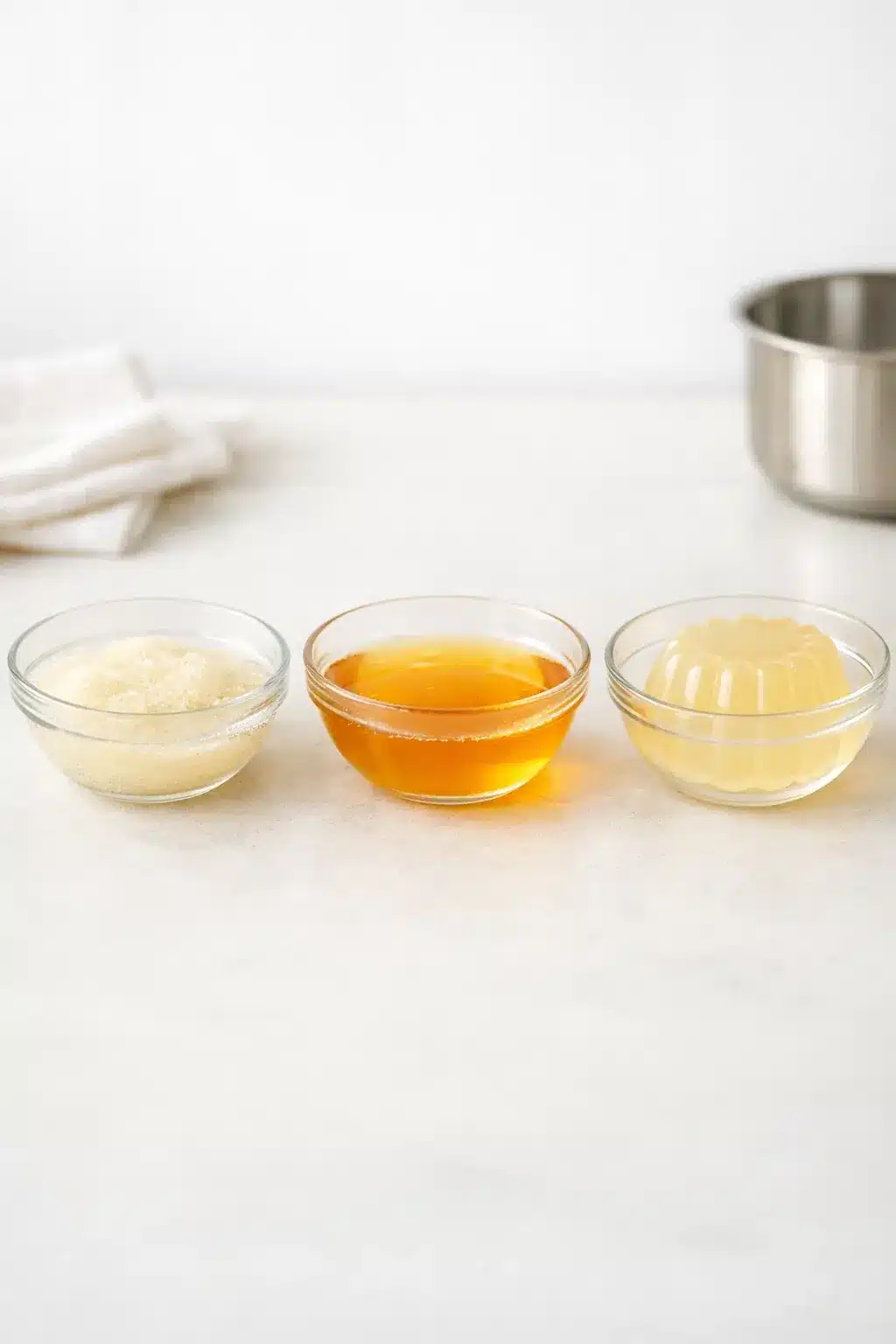
Sugar, dairy fat, alcohol, and acid can change set strength and timing. You can still get reliable results by blooming thoroughly, dissolving cleanly, and chilling long enough.
Bloom in Cold Liquid
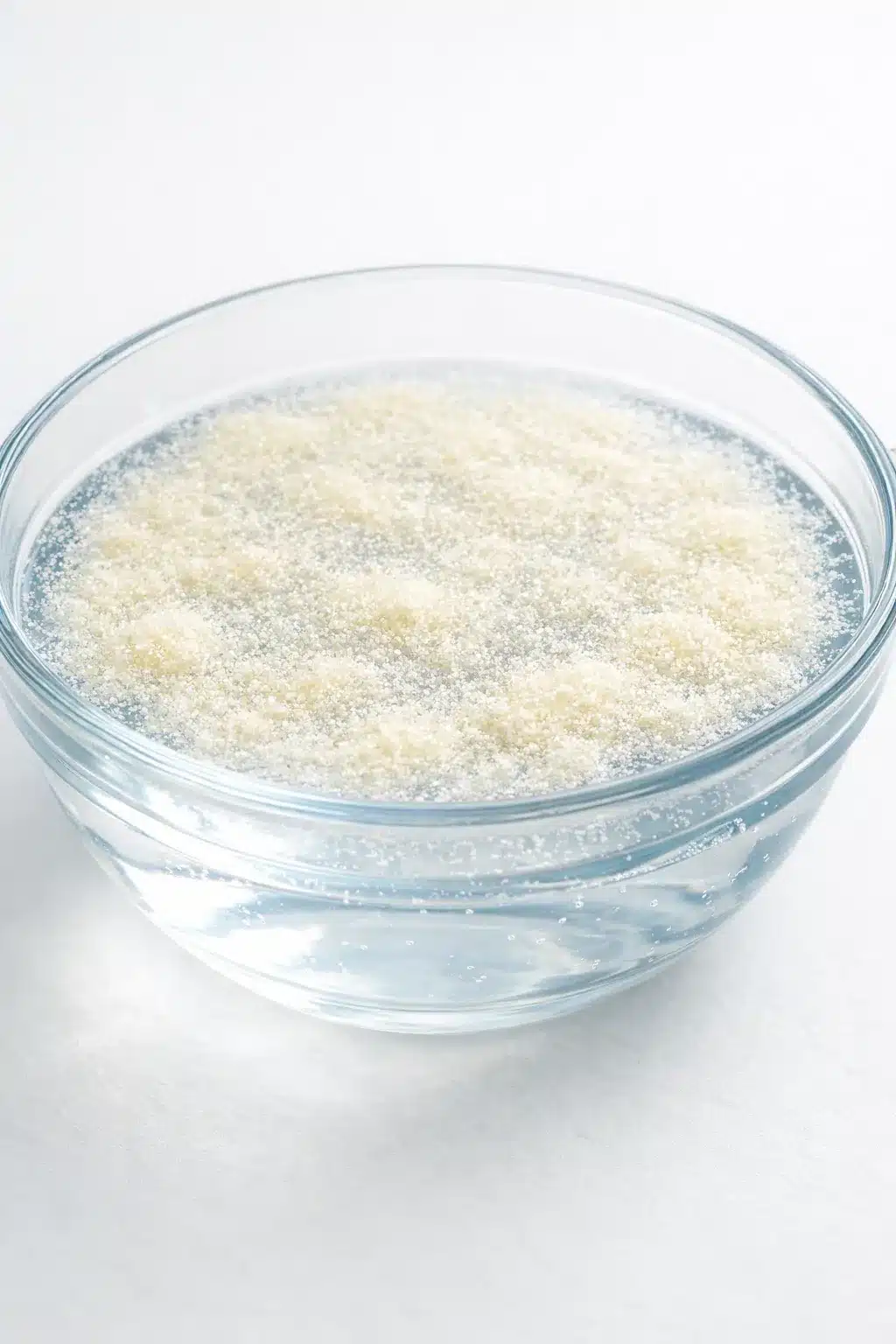
For powdered gelatin, sprinkle the granules evenly over a cold liquid. Cover the surface fully so every grain hydrates. Let it sit about 5 minutes, or until the surface looks wrinkled and spongy.
When you want a picture walkthrough, our step-by-step on how to bloom gelatin covers both powder and sheets. It also shows how to prevent clumps and confirms your liquid temperature range.
Dissolve in Warm Liquid
After blooming, warm the mixture gently over low heat. Stir until the gelatin dissolves and the liquid turns clear. Keep the temperature moderate and avoid boiling, which can weaken the gelling power.
For best practice notes on overheating, ratios, and clump prevention, the industrys industry FAQ on gelatin summarizes key handling rules.
Precise temperatures help, especially for delicate dairy desserts. Use our gelatin temperature guide to know how warm to dissolve and how cold to set without compromising texture.
Chill and Set Time
Once dissolved, combine the gelatin with your base and portion it. Then refrigerate until set. Clear fruit gels often set in 2 to 4 hours. Creamy desserts may take 4 to 6 hours, or overnight for a perfect quiver.
Gelatin should set in the refrigerator, not at room temperature. Some thin layers seem firm at room temp, but the best structure forms when fully chilled. Larger molds and dairy-rich mixtures simply need more time.
For storage times, serving temperatures, and food safety, review our quick notes on gelatin storage. You will see how to hold leftovers safely and how long the texture stays optimal.
If you want ideas to practice with, browse our guide to gelatin desserts. Youll find panna cotta, gummies, marshmallows, fruit gels, and parfaits with tips for set and storage.
Basic Ratios and Conversions
Ratios determine whether your gel is soft and creamy or firm and sliceable. The ideal amount depends on bloom strength, sugar level, acidity, alcohol, and whether the base is water or dairy. Use the rules below as a smart starting point.
Rule of Thumb for 500 ml
For a firm fruit jelly that slices cleanly, start with 9 grams powdered gelatin for 500 ml liquid. That equals 6 standard sheets. For a softer set, like a delicate panna cotta or mousse, use about 7 grams powder or 4 to 5 sheets for 500 ml dairy base.
Very firm candies like gummies often need 12 to 15 grams powder per 500 ml, depending on sugar and acid. Always test your specific brand once to dial in your exact preference.
For quick conversions between soft, medium, and firm sets, save our ratio guide for 500 ml. It summarizes both powder and leaf amounts and flags when to adjust for alcohol or citrus.
Powder to Sheet Conversion
The common equivalence is easy to remember: 9 grams powdered gelatin equals 6 sheets for 500 ml. That is the baseline most cooks use for a firm fruit gel. It also gives you a predictable starting point for cream-based desserts when you use a little less.
Individual sheet weights vary by grade. Silver, gold, and platinum differ slightly, but the count-per-500-ml convention keeps results consistent. When stakes are high, weigh your leaves and target the same total grams as your powder recipe.
Gelatin vs Collagen Peptides
Both gelatin and collagen peptides come from collagen. Yet they behave very differently in the kitchen. Peptides are hydrolyzed further so they dissolve instantly and never form a gel. Gelatin hydrates, then gels as it cools.
Solubility and Gelling Differences
Use collagen peptides for nutrition shakes or hot beverages. They dissolve in cold water and do not require blooming. Do not use peptides to set panna cotta or jelly. They will never gel.
Use gelatin whenever you need a tremble and slice. Bloom it in cold liquid, dissolve it warm, and chill it fully. If you need a non-animal option, our guide to gelatin substitutes explains when to choose agar, carrageenan, or pectin instead.
Troubleshooting Quick Fixes
Most problems trace back to hydration, temperature, ratio, or time. Luckily, fixes are straightforward. You can often re-melt a mixture, correct the issue, and reset the dessert without waste.
Clumps and Weak Set
Clumps happen when powder isnt fully moistened during the bloom. Sprinkle evenly over cold liquid and wait the full 5 minutes. If you do get clumps, warm gently and whisk until smooth, then strain through a fine sieve.
A weak set usually means too little gelatin or not enough chill time. Recheck your ratio and give the dessert more hours in the refrigerator. For precision, weigh gelatin instead of measuring by spoon, especially for large batches.
Heat also matters. Overheating can weaken the gel, and boiling can reduce gelling power. Always dissolve over low heat and remove from the burner as soon as the liquid clears.
Acidic and enzyme-rich fruits can complicate things. Fresh pineapple, papaya, kiwi, and figs contain enzymes that can prevent a gel. Briefly cook those fruits to denature enzymes, or use canned versions to avoid failure.
For more causes and cures, including grainy texture, alcohol-heavy mixes, and fruit enzymes, see our complete gelatin troubleshooting. Quick diagnosis saves time and ingredients.
- Choose your form: powder for easy measuring, sheets for ultra-clear gels.
- Check bloom strength when switching brands, and adjust gently if needed.
- Use smart ratios: start at 9 g powder or 6 sheets per 500 ml for firm fruit gels.
- Bloom correctly: sprinkle powder over cold liquid and wait about 5 minutes.
- Dissolve gently: warm until just clear, and never boil.
- Chill fully: refrigerate 2 to 6 hours depending on thickness and dairy content.
- Store safely: keep set desserts cold and covered for best texture.
FAQ
What is gelatin made from?
Gelatin is a protein derived from collagen in animal connective tissue such as pigskin, bovine hides, and demineralized bones. Fish and chicken sources also exist for dietary needs.
Is gelatin vegetarian or vegan?
No. Gelatin is animal-derived. Vegetarian and vegan recipes should use plant-based gelling agents and follow recipes designed for them.
What is bloom strength?
Bloom strength is a standardized lab measure of gel firmness. It describes how strong a gel will be under test conditions.
What is the difference between powdered and sheet gelatin?
Both are gelatin, but they are measured differently. Powder is weighed or measured by packet, while sheets are counted by leaf and then dissolved after soaking.
How do you use gelatin sheets?
Soak sheets in cold water about 5 minutes until soft, squeeze out excess water, then dissolve in warm (not hot) liquid.
How much gelatin do I need for 500 ml?
A common rule of thumb is 9 g powdered gelatin for 500 ml of liquid, equivalent to 6 sheets.
Does gelatin set at room temperature?
Gelatin needs time and cold temperatures to set. Small amounts may set in about an hour, while larger or cream-based desserts can take several hours in the refrigerator.
Can gelatin be frozen?
Gelatin mixtures can become crumbly if frozen. For best texture, set and store gelatin desserts in the refrigerator.
Is gelatin the same as collagen peptides?
No. Collagen peptides are highly soluble and do not form a gel, while gelatin gels when cooled.
Conclusion
Master the basics and gelatin becomes effortless: select your form, match the ratio, bloom, dissolve, and chill. When you are ready for new ideas, browse our Pinterest boards for playful, wobbly desserts that show off your new skills.