
Can I use collagen instead of gelatin for that jiggly, glossy cube? If you want your mixture to set into cubes or jello, you need gelatin. Collagen peptides will not set when cooled. Choosing the right one keeps your texture on point and prevents wasted batches. I will show you exactly when to pick gelatin for firm bites and when collagen makes sense for a smooth sip.
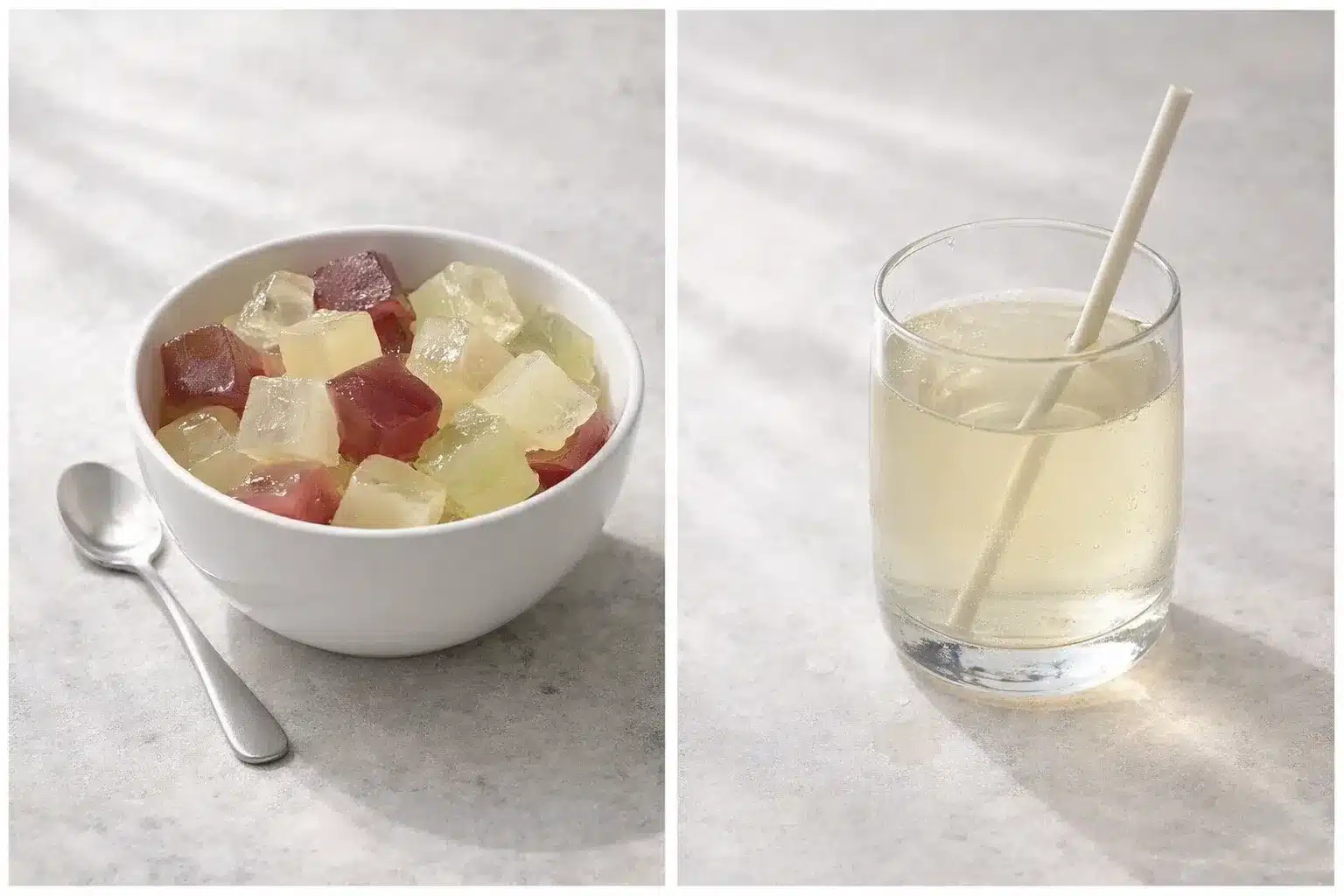
You will learn a simple rule, how each ingredient is made, and mixing steps that prevent clumps. We will cover why gelatin sets but collagen does not, and how to choose based on your goal. You will see a clean decision list and texture notes for the drink version versus cubes. After this, you can run the classic gelatin trick or a drink-only approach with confidence.
Table of Contents
Can You Use Collagen Instead of Gelatin? (Direct Answer)
Use gelatin for anything that must set when chilled. Use collagen peptides for a drink that stays liquid. They are related proteins, but they act very differently in your glass.
- Want cubes/jello texture → use unflavored gelatin.
- Want a no-set drink you can sip anytime → collagen peptides can work.
- Want the classic viral method (drink-before-it-sets or cubes) → gelatin is the correct ingredient.
The one rule: cubes need gelatin; collagen won’t set
This is the #1 confusion in gelatin vs collagen: collagen peptides are NOT a 1:1 substitute for gelatin in gelatin desserts. Peptides dissolve easily but do not re-form a gel, so your mixture will stay liquid. If you want firm cubes or true jello, you must use gelatin.
Gelatin vs Collagen Peptides (What Each One Is)
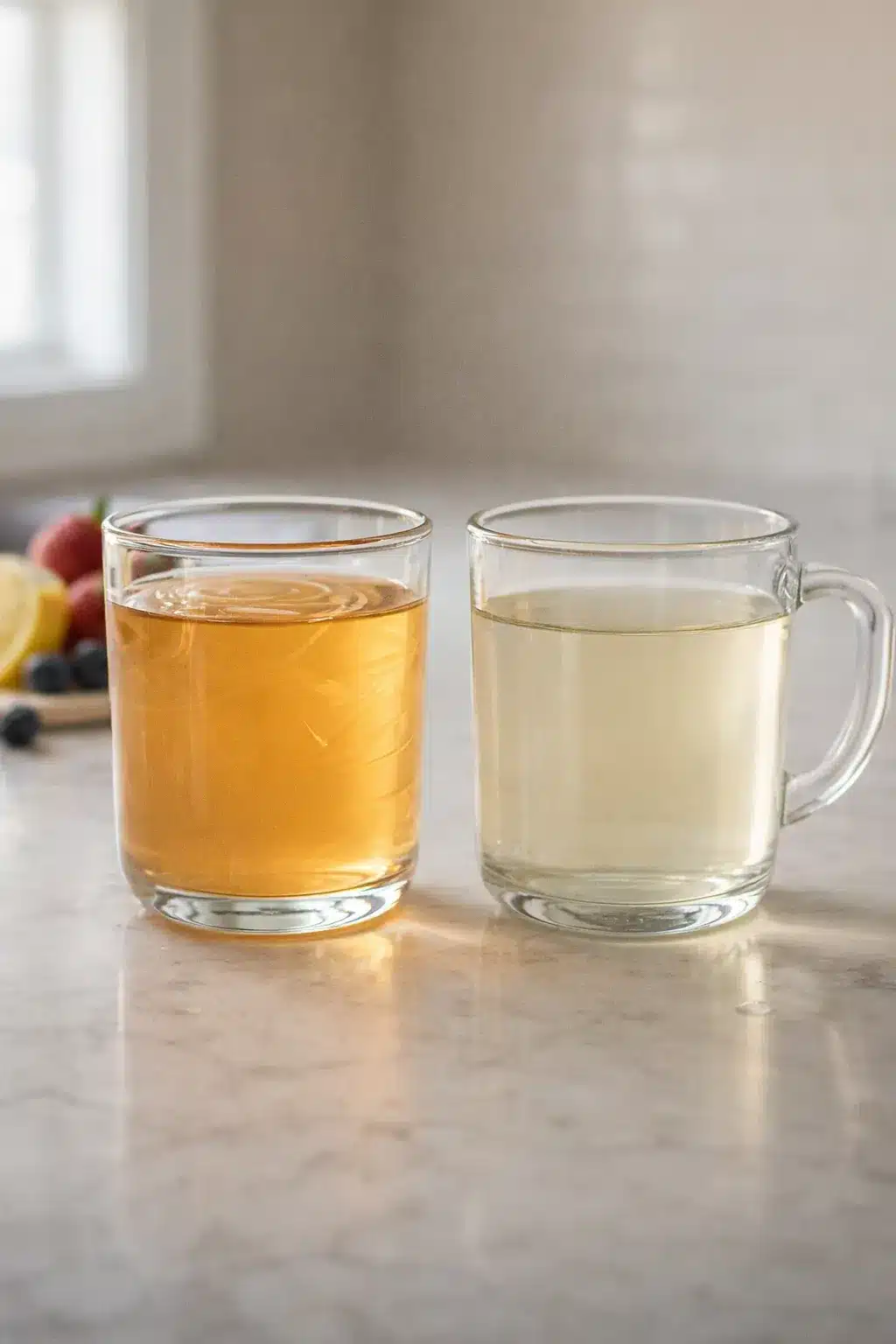
How gelatin is made from collagen
Gelatin comes from collagen found in animal connective tissues. Producers extract collagen, then partially hydrolyze it so the long chains can later form a gel as they cool. For fundamentals on forms, bloom strength, and proper handling, see what gelatin is.
Labels often list Bloom value, which indicates firmness. Higher Bloom means a stronger gel and shorter set times. If you care about ingredients and labeling origins, check gelatin sources to understand raw materials and dietary notes.
What “collagen peptides / hydrolyzed collagen” means
Collagen peptides are collagen broken down into smaller pieces through further hydrolysis. That processing makes them dissolve quickly in hot or cold liquids and keeps the mouthfeel smooth. For a consumer-friendly definition, read what collagen peptides are.
Because peptides are much shorter, they no longer have the structural length needed to create a gel network. They bring protein to a drink, but not the jiggle of set gelatin.
The Functional Difference That Matters (Gelling vs No-Gel)
Why gelatin sets when cooled
When you dissolve gelatin in hot liquid and then cool it, the protein strands partially re-associate. They form a fine network that traps water and creates a bouncy, sliceable gel. The strength of this network is reflected by the Bloom number. For a technical explainer, read about gelatin’s gelling power.
Why collagen peptides dissolve but don’t harden
Collagen peptides are further hydrolyzed, so the chains are too short to link into a gel network. As a result, collagen peptide solutions do not harden even when cooled. They stay pourable, which is ideal for drink-only routines.
Technical references agree that hydrolyzed gelatins and collagen hydrolysates are soluble in cold water but have no gelling power. That is why collagen peptides are not a jello substitute.
Which One Should You Use for the Gelatin Trick?
If you want cubes/jello texture → gelatin
Choose unflavored gelatin if you want cubes you can portion and chew. Bloom the gelatin in a bit of cold liquid, dissolve it in hot liquid, then chill until firm. This method works with tea, juice, or flavored water. It is also the correct choice for the classic drink-before-it-sets approach.
Remember, a gelatin drink thickens as it cools. If you plan to sip it warm, drink it before it turns syrupy. If you plan to chill, let it fully set and cut into clean cubes.
If you want drink-only → collagen can work (but it’s a different routine)
Collagen peptides dissolve fast and do not gel, which makes them simple for drink-only routines. Stir into coffee, tea, or water and sip anytime. Your drink stays thin, even in the fridge.
This is a different habit, not a 1:1 swap for gelatin. It is sometimes called the gelatin trick collagen version. You get protein without the gel texture or cube-based portioning.
If you need a vegetarian set instead of animal gelatin, consider plant-based gelling agents. See our overview of gelatin substitutes for when options like agar or kappa carrageenan make sense.
Mixing and Texture Tips (So You Don’t Ruin the Batch)
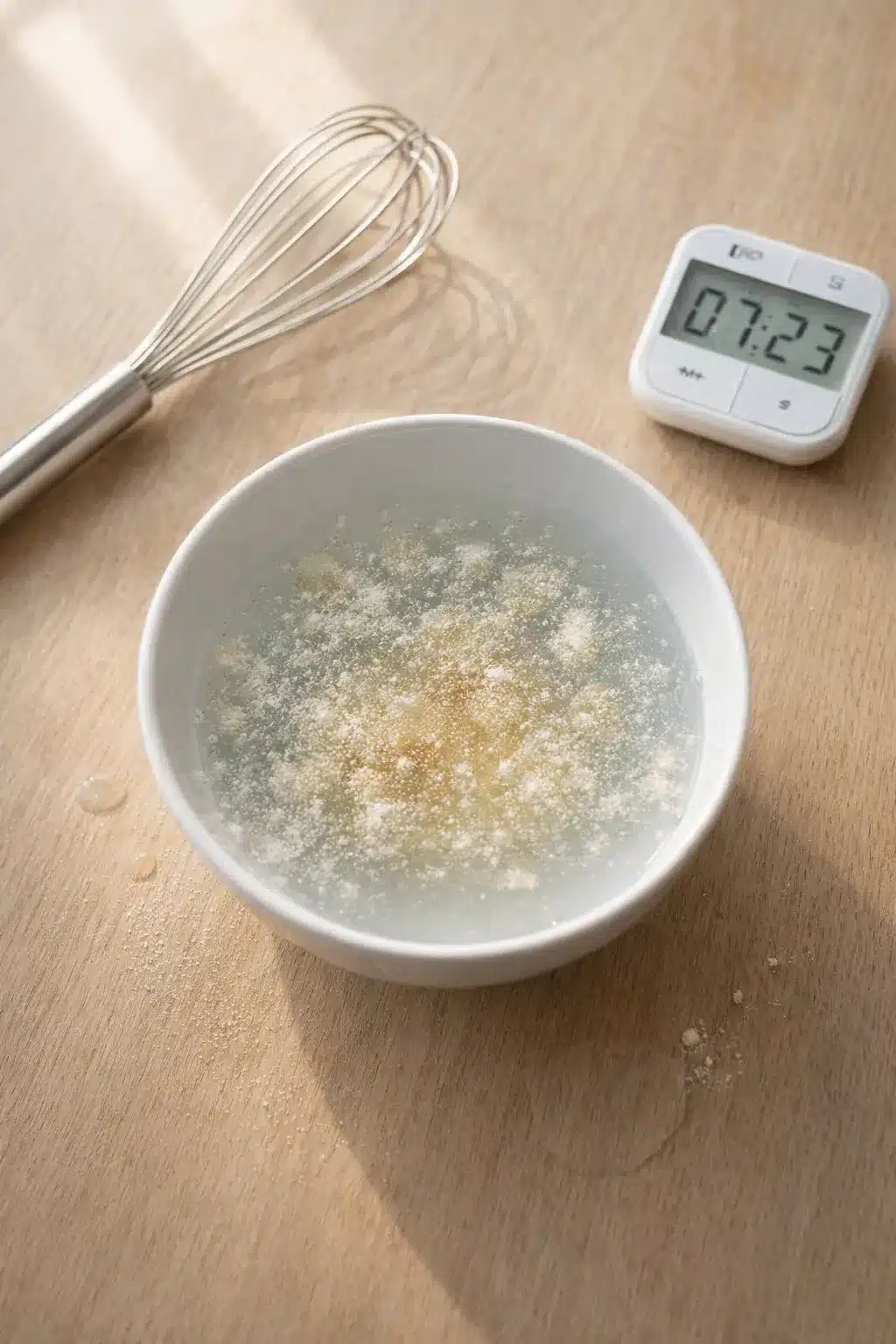
Gelatin: blooming + dissolve order
Sprinkle gelatin over cold liquid and let it bloom 5 to 10 minutes until spongy. Heat another portion of liquid to about 140 to 160 F, then whisk the bloomed gelatin into the hot liquid until fully dissolved and clear. Do not boil after gelatin goes in, since high heat weakens its gelling power. Pour into a dish or molds and chill until set.
Collagen: how to dissolve smoothly
Collagen peptides usually dissolve directly in hot or cold liquid. Sprinkle while whisking or blitz with a small milk frother. Start with room temperature or warm liquid for the fastest dissolve.
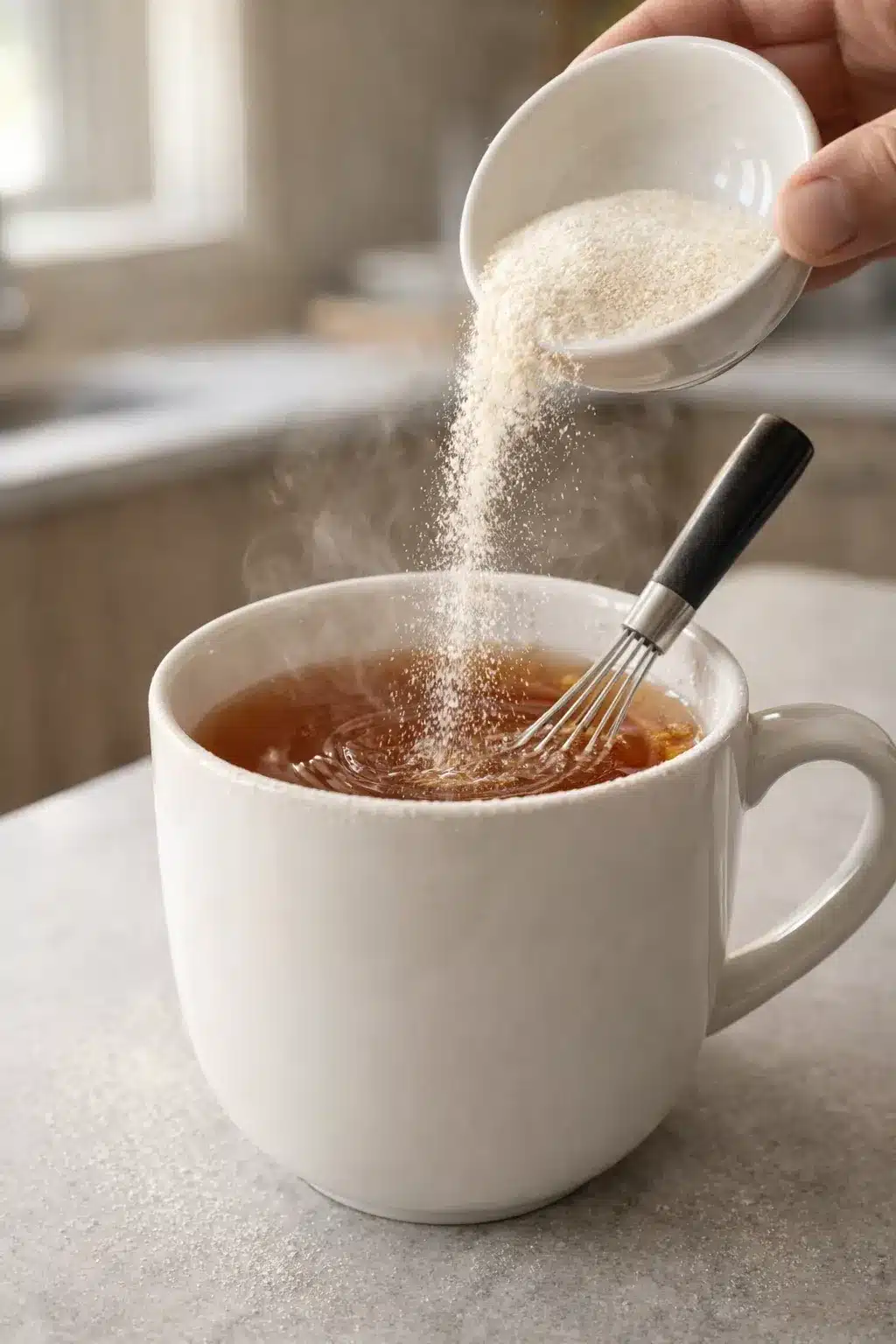
Avoid dumping collagen into a vigorously boiling liquid. Some brands can foam when shocked by very hot water. If foaming happens, stir gently, wait a minute, and skim bubbles before drinking.
Combining both (how to keep it setting)
You can add collagen peptides to a gelatin-based recipe for extra protein, but keep the original gelatin amount if you want it to set. Collagen is an add-on, not a replacement.
Bloom and fully dissolve the gelatin first, then take the pot off the heat. Whisk in the collagen until smooth. Pour and chill. Avoid boiling after gelatin is added, and avoid adding collagen to rolling-boil liquid to reduce foaming.
What This Means for Weight Loss (Realistic Expectations)
Appetite routine vs fat-burning claims
Collagen vs gelatin for weight loss is about routine and fullness, not fat burning. A pre-meal protein pause can help some people feel satisfied and eat a bit less. The gel texture and cube ritual also make portioning obvious and slow you down.
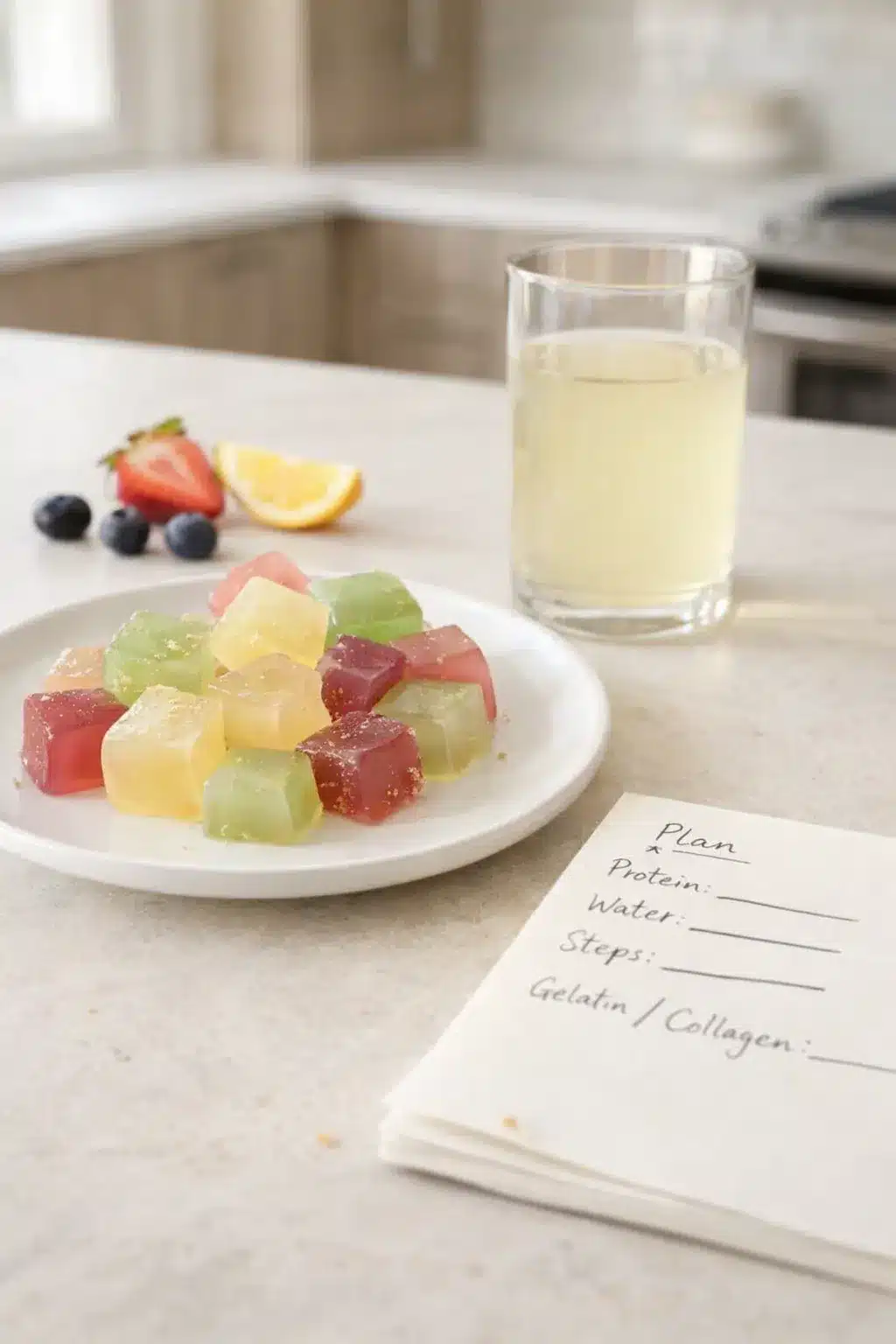
For an evidence-aware walkthrough of timing, customization, and realistic expectations, see the gelatin trick recipe. Use it to build a habit that fits your meals and preferences.
FAQ
Can I use collagen instead of gelatin for the gelatin trick?
Not if you want it to set into cubes or jello. Collagen peptides (hydrolyzed collagen) dissolve easily but do not harden/gel when cooled. If you only want a drink version, collagen peptides can be used but it becomes a different routine (no gel texture).
Why doesn’t collagen peptides set like gelatin?
Collagen peptides are hydrolyzed into smaller pieces so they dissolve easily in hot or cold liquids. That processing removes the gelling power that gelatin has, so it won’t form a firm gel when chilled.
Which should I use if I want cubes?
Use unflavored gelatin. The cube versions of the gelatin trick rely on gelatin’s ability to gel when cooled.
Which should I use if I want a drink I can sip anytime?
Collagen peptides are easier for drinks because they dissolve without setting. Gelatin drinks can start to thicken as they cool, which some people dislike.
Is gelatin basically the same as collagen nutritionally?
They come from the same source protein, but collagen peptides are more broken down (smaller). In your body, both ultimately contribute amino acids/peptides, but they behave very differently in recipes and textures.
If I only care about appetite control, does the ‘gel texture’ matter?
For many people, the gel texture and ritual (pre-meal pause) are a big part of why the gelatin trick feels helpful. A collagen drink may still support a routine, but it won’t mimic the same gel-setting experience or cube-based portioning.
Can I mix both gelatin and collagen together?
Yes, some people add collagen peptides to a gelatin-based recipe for extra protein, but you should keep gelatin in the recipe if you want it to set. Mix collagen only after gelatin is fully dissolved to reduce clumps.
Conclusion
If you want gelled cubes, use gelatin; if you want a no-set drink, collagen peptides fit the job. Choose based on texture, then mix accordingly for smooth results. For more practical kitchen ideas and prep inspiration, follow our Pinterest boards.