
Gelatin sources shape how your desserts feel, from bouncy fruit gels to silky panna cotta. When you understand where gelatin comes from, you pick the right box with confidence. You also match dietary needs, avoid surprise flavors, and get consistent results in your kitchen.
In this guide, you will learn what gelatin is made from, how producers select raw materials, and why sources vary by region and diet. You will also see how halal and kosher certifications appear on labels, plus what to check before you buy. Then you can choose the best gelatin for marshmallows, mousse, or jiggly treats.
We will keep the focus on sourcing and label reading. You will find plain, practical advice to help you shop and cook without second-guessing every package.
Table of Contents
What Gelatin Is Made From
Gelatin is a culinary protein derived from collagen in animal connective tissue. Producers extract collagen from skins, hides, and bones, then process it into a clean, neutral gelling ingredient. When dissolved hot and cooled, gelatin forms a delicate gel that gives desserts their hallmark wobble.
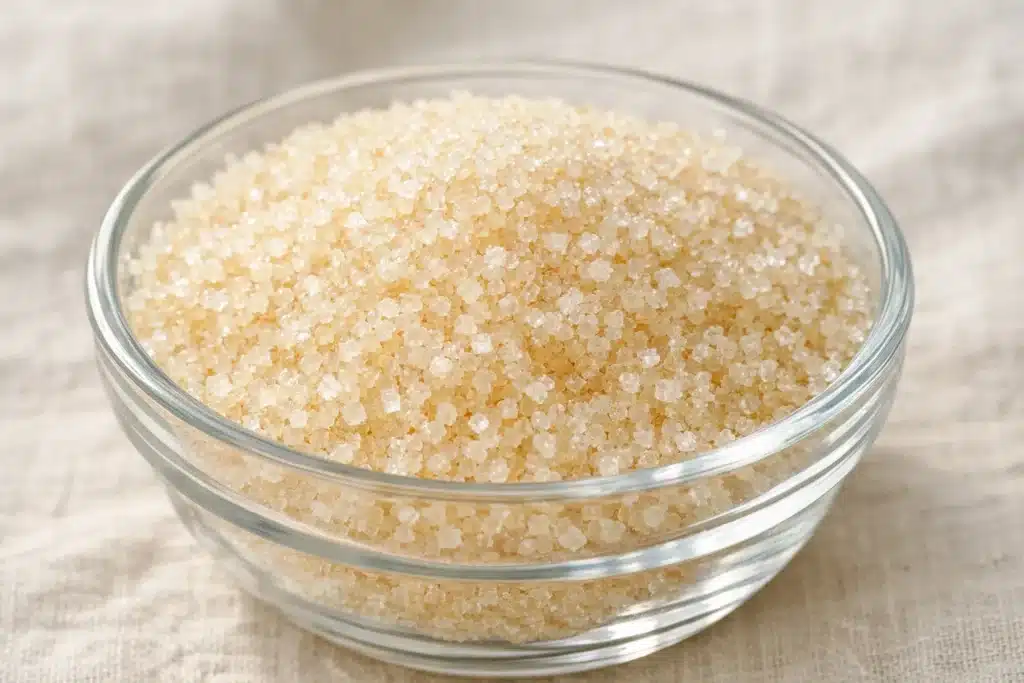
At a high level, gelatin is made from animal parts that are rich in collagen. That collagen comes primarily from skin and bones. The result is not vegetarian, and it is distinct from plant-based gelling agents. It is also different from collagen peptides, which stay liquid.
For a quick kitchen primer on forms, bloom strength, and blooming basics, see what gelatin is. You will find how powdered and sheet gelatin behave and how to dissolve them properly.
Industry references outline the main inputs clearly. See this concise gelatin definition and sources for a list that includes pigskin, bovine hides, demineralized bones, fish, and chicken.
Collagen in Skin and Bones
Collagen is the structural protein that makes skin, hides, and bones tough yet flexible. During gelatin production, collagen fibers are gently broken down with controlled treatments and heat. They unwind into smaller chains that can form a network when cooled in water.
That network sets softly and melts in the mouth. It gives cheesecakes a clean slice, stabilizes whipped creams, and holds fruit purees into elegant cubes. It is the science behind the wobble you love.
You may see “gelatin made from bones” or “from hides” on a package or website. Both are accurate. The specific choice depends on availability, regional preferences, and dietary or religious requirements.
Common Raw Materials
Most food-grade gelatin comes from a small set of animal materials that are naturally dense in collagen. Manufacturers choose among them based on supply, tradition, and customer needs.
Pork, Bovine, Fish, Chicken
- Pork gelatin (pigskin) – Pigskin is widely used, especially in Europe. It yields reliable, neutral-tasting gelatin with excellent clarity. Labels may state “porcine” or simply “pork gelatin.” Some shoppers avoid it for religious or personal reasons.
- Beef gelatin (bovine hides) – Bovine hides are another major source. Labels may say “bovine” or “beef gelatin.” Many halal or kosher products use bovine sources when certified, since pork is not acceptable in those traditions.
- Demineralized bones – Producers also use demineralized bones, often from cattle. Once minerals are removed, collagen is extracted, filtered, and dried. Bone-derived gelatin performs like hide-derived gelatin in most culinary uses.
- Fish gelatin – Fish gelatin comes from fish skins and bones. It is common where religious or cultural needs favor non-porcine products. It often has a lower gelling and melting temperature, so desserts may feel softer at room temperature.
- Chicken – Chicken sources are less common but still used. They may appear in specialty or regional products. As always, check labels for the exact origin and any certification marks.
Source choices often vary by region. For example, you may see more pigskin in Europe, more bovine in North America and the Middle East, and more fish gelatin in parts of East and Southeast Asia. These patterns reflect supply chains and dietary needs more than culinary performance alone.
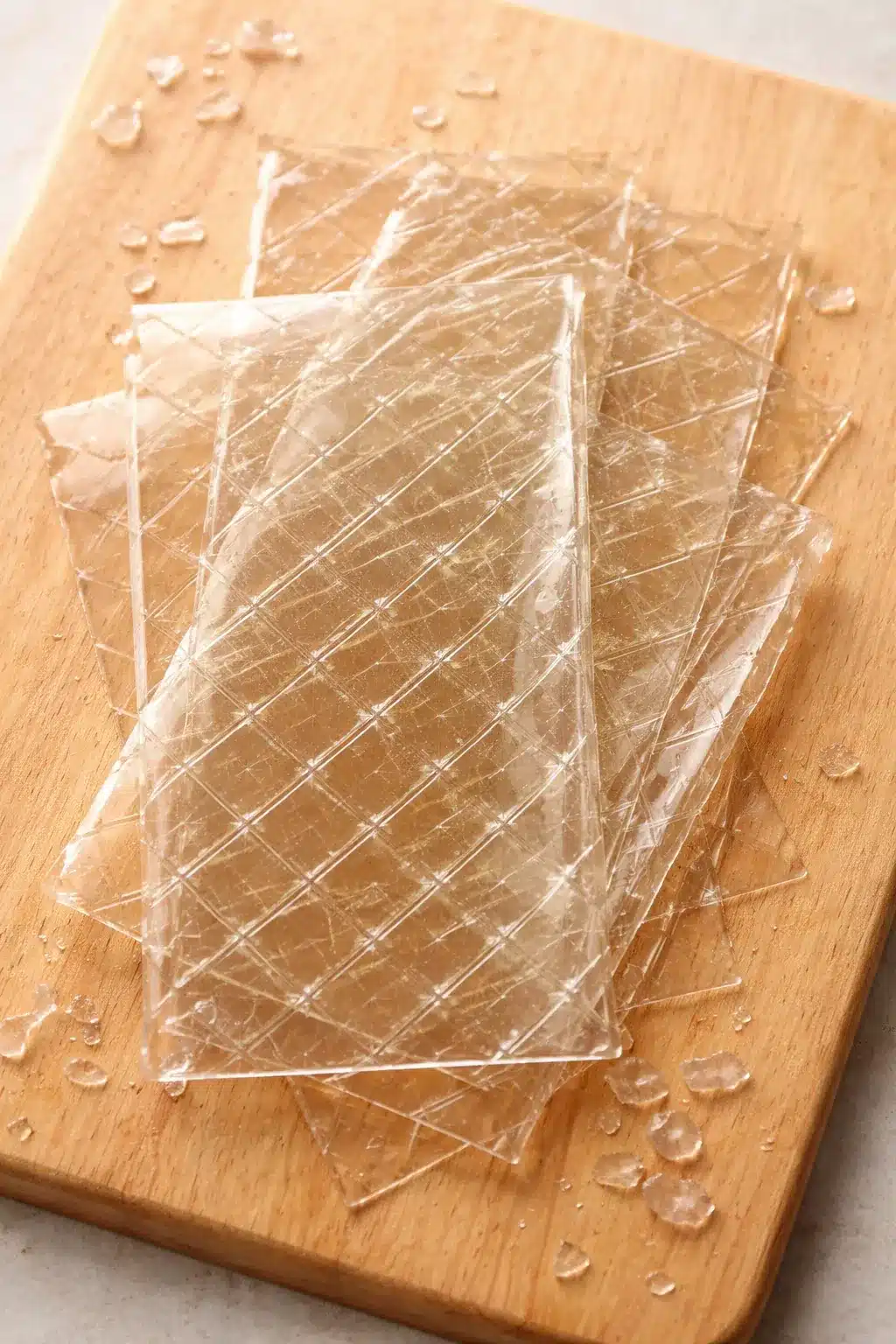
If a package only says “gelatin” without naming the species, check the brand’s website or contact customer service. Many brands publish the animal source online or on a detailed specification sheet. Some also print “porcine-free,” “pork-free,” or “bovine” to simplify shopping.
How Raw Materials Are Approved
Food gelatin is produced from raw materials approved for human consumption. That means the skins, hides, or bones come from animals that were inspected and deemed fit for food. The materials typically originate from licensed slaughterhouses or fish processing plants that handle edible products.
After collection, the materials undergo cleaning and carefully controlled pre-treatments. They are then extracted with hot water, filtered, concentrated, and dried. Finally, the gelatin is milled and tested for specifications like bloom strength and clarity.
If you want a high-level snapshot of the process and material controls, this gelatin manufacturing overview is a helpful industry resource. It emphasizes the focus on food-approved sources and hygienic production.
Home cooks sometimes confuse gelatin with collagen peptides. The two are related but act differently in recipes. If you are trying to swap one for the other, read this practical guide to collagen vs gelatin before you mix a batch.
Fit for Human Consumption
“Approved for human consumption” indicates that raw materials come from food-grade streams and meet regulatory standards. Producers maintain traceability and quality records, then test the finished gelatin to meet set specifications. This is standard practice for edible gelatin worldwide.
While exact regulations vary by country, the principle stays the same. Only materials that qualify as suitable for food are used to make the gelatin you buy. That is why you can trust the consistency of food-grade gelatin, whether it originates from pigskin, bovine hides, bones, fish, or chicken.
Labels and Dietary Considerations
Reading the label will tell you most of what you need to know. Look for the animal source first. Phrases like “pork gelatin,” “beef gelatin,” “bovine gelatin,” or “fish gelatin” are common. Some packages simply list “gelatin,” while others note “porcine” or “bovine” in parentheses.
Next, check the bloom strength and form. Powdered gelatin is popular with home cooks because it measures easily. Sheet gelatin dissolves cleanly and gives very clear gels. Bloom numbers indicate gel strength; your recipe will usually state what it needs. When in doubt, start with standard-strength powder.
Also consider where you live and what stores carry. Source options and label wording can vary by region and retailer. In some countries, package space is tight, so brands publish more details online.
Vegetarian or avoiding certain animal sources? Consider modern gelatin substitutes that mimic gelling or thickening in specific recipes. Options include agar, pectin, and starch systems. Each works best in particular styles of desserts.
Halal and Kosher Certification
You might ask, is gelatin halal? Or is gelatin kosher? The answer depends on both the animal source and how the gelatin is produced. Look for clear halal or kosher certification marks on the package, and verify the certifier if needed.
Halal gelatin comes from animals slaughtered and processed according to Islamic dietary law, or from fish when permitted. Kosher gelatin has its own requirements around species, slaughter, and processing. Some certified products use bovine hides or bones; others use fish. In every case, the label or a certificate should confirm compliance.
Pay attention to how brands phrase their claims. “Pork-free” does not automatically mean halal or kosher. The safest route is an explicit halal or kosher symbol from a recognized body. When in doubt, check the company site for a downloadable certificate.
- Source – Identify the animal: pork (pigskin), beef/bovine (hides or demineralized bones), fish, or chicken.
- Certification – If needed, confirm halal or kosher on the label or with a posted certificate.
- Form – Choose powder or sheets and the right bloom strength for your recipe.
FAQ
Is gelatin made from pork?
Often, yes. Many gelatin products use pigskin, but bovine and fish sources are also common.
Is gelatin made from bones?
Yes. Gelatin can be made from demineralized bones as well as skins and hides.
Is fish gelatin available?
Yes. Fish gelatin is produced for dietary or cultural needs.
Is gelatin halal or kosher?
It depends on the source and certification. Check labels for halal or kosher approval.
Are raw materials approved for food use?
Yes. Industry sources state gelatin is produced from raw materials approved for human consumption.
Conclusion
Now you know the main gelatin sources, how to read labels, and what certifications mean, so you can pick the right box for every dessert. For ongoing inspiration and pantry tips, browse my Pinterest cooking boards and keep your gelatin game smooth, clear, and consistent.