
Leaf gelatin vs powder is the choice that decides how silky your panna cotta feels and how glossy your mirror glaze looks. Both set liquids into a tender, wobbly gel, yet they behave differently from prep to pour. With a few core techniques, you can dissolve cleanly, avoid clumps, and lock in that glassy, delicate finish every time.
You will quickly learn the forms, how to bloom them, and how to swap leaf gelatin for powder without guesswork. We will cover exact times, a practical conversion for 500 ml, and the fixes for clumps or weak sets. By the end, you can choose the format that fits your dessert, tools, and timeline.
Table of Contents
Forms of Gelatin
Gelatin is sold in two forms: sheets (also called leaves) and powder (granules). Both are collagen proteins that create a thermo-reversible gel. For a deeper refresher on bloom strength and fundamentals, see what gelatin is.
Powdered or Granulated
Powdered gelatin is convenient if you cook by weight. It stores well, measures precisely on a scale, and dissolves reliably once bloomed. You can dose tiny amounts for small test batches or scale up for a crowd, which suits large pans of cheesecake or big batches of glaze.
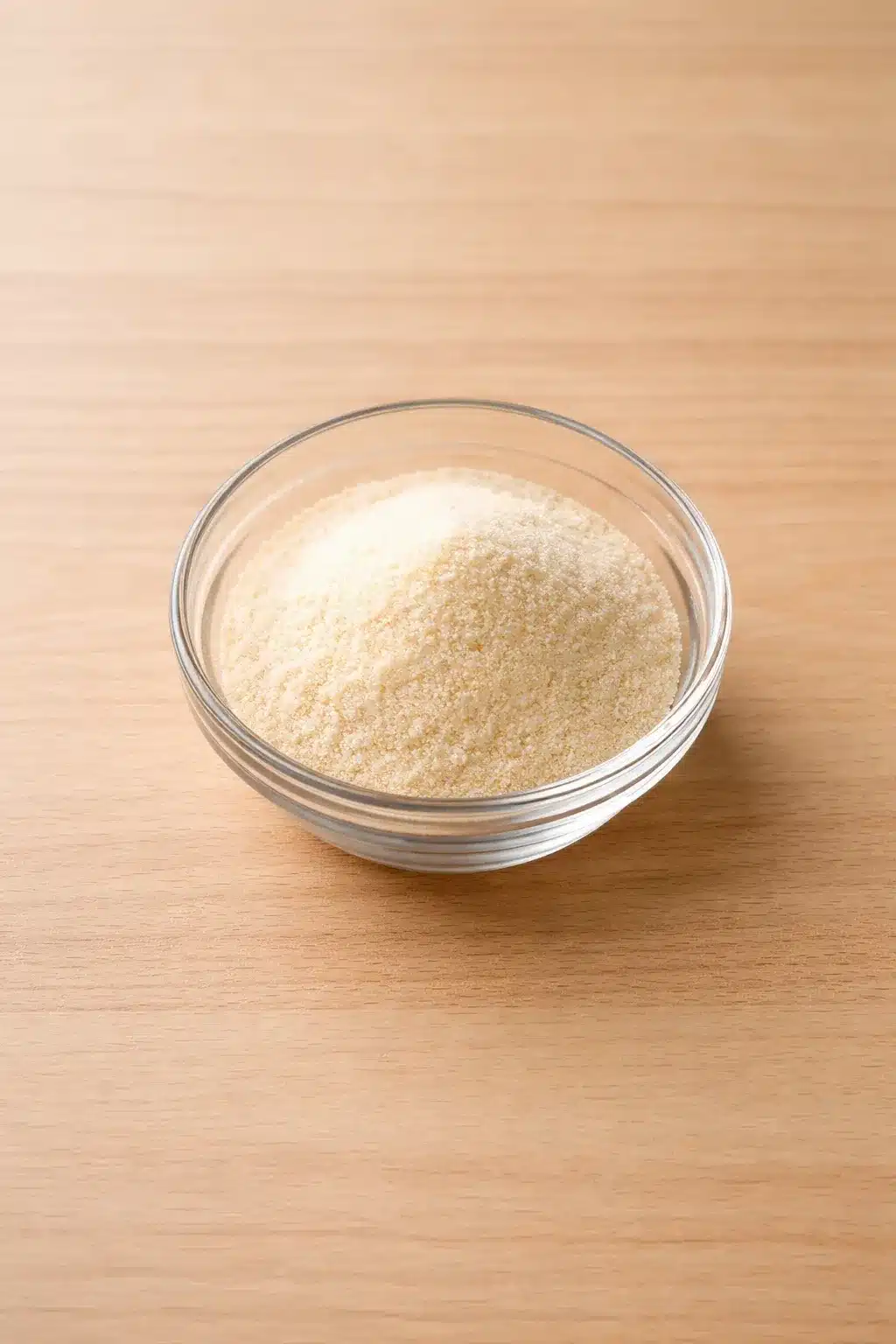
Because the particles are small, powdered gelatin blooms quickly and dissolves fast. You will also find it everywhere in grocery stores. However, it is easy to dump in a mound and form clumps. It also introduces a little water to your recipe during blooming, which you must account for in tight ratios.
Sheet or Leaf
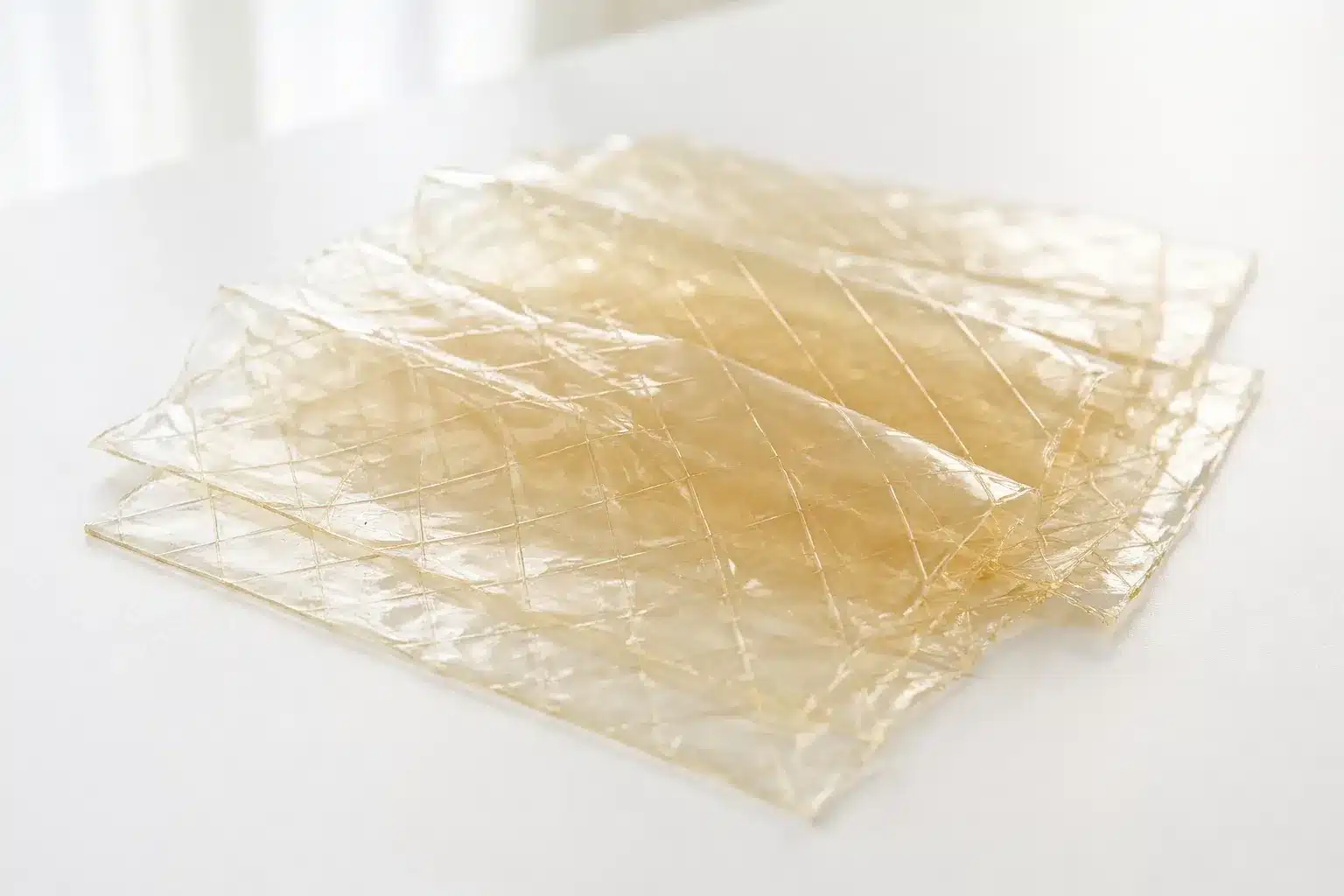
Leaf gelatin comes as thin, translucent sheets. It is easy to portion without a scale, since you can count leaves. Many pastry chefs like sheets for their clean flavor and clear finish in jellies and mirror glazes.
Sheets must be soaked in cold water first, then squeezed and melted into your warm base. They do not require a specific water ratio for soaking, and they add no extra water once squeezed. Because pieces are uniform, sheet gelatin conversion is straightforward when a recipe calls for “2 or 3 leaves.”
How to Prepare Each Form
The goal is the same for both types: hydrate the gelatin fully, then dissolve it gently. Next, combine with your base and chill undisturbed until set.
Powdered Gelatin Steps
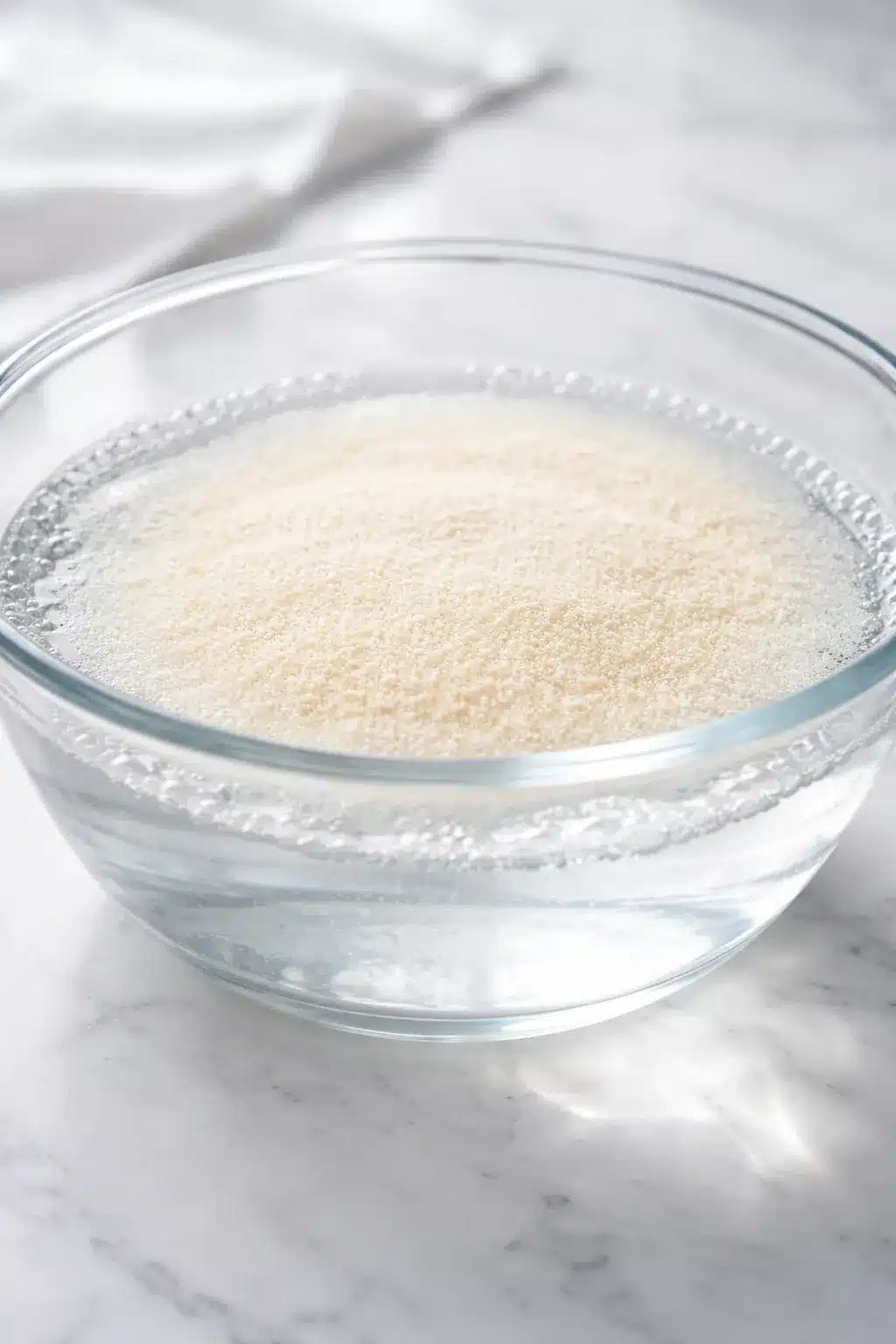
Start with cold liquid. Sprinkle the powder evenly over the surface, covering the area in a thin, even layer. Do not dump it in one spot. Let it bloom undisturbed for about 5 minutes until spongy and absorbed. Then warm the mixture on low heat, stirring gently, until the granules dissolve completely. Keep it below a simmer. A short note from the Gelatine.org FAQ mirrors this process: bloom in cold liquid, then dissolve gently without boiling.
If you need to dissolve the bloomed gel without the rest of your base, use low heat or short microwave bursts. Stir between bursts until the liquid turns clear and free of grains. Finally, temper it into your base, mix thoroughly, and strain if clarity matters.
Sheet Gelatin Steps
Place the sheets in a bowl of very cold water. Soak for about 5 minutes, or until fully soft and pliable. Lift the sheets out and squeeze them firmly to remove excess water. Finally, whisk the softened sheets into a warm base (not boiling) until fully melted and smooth.
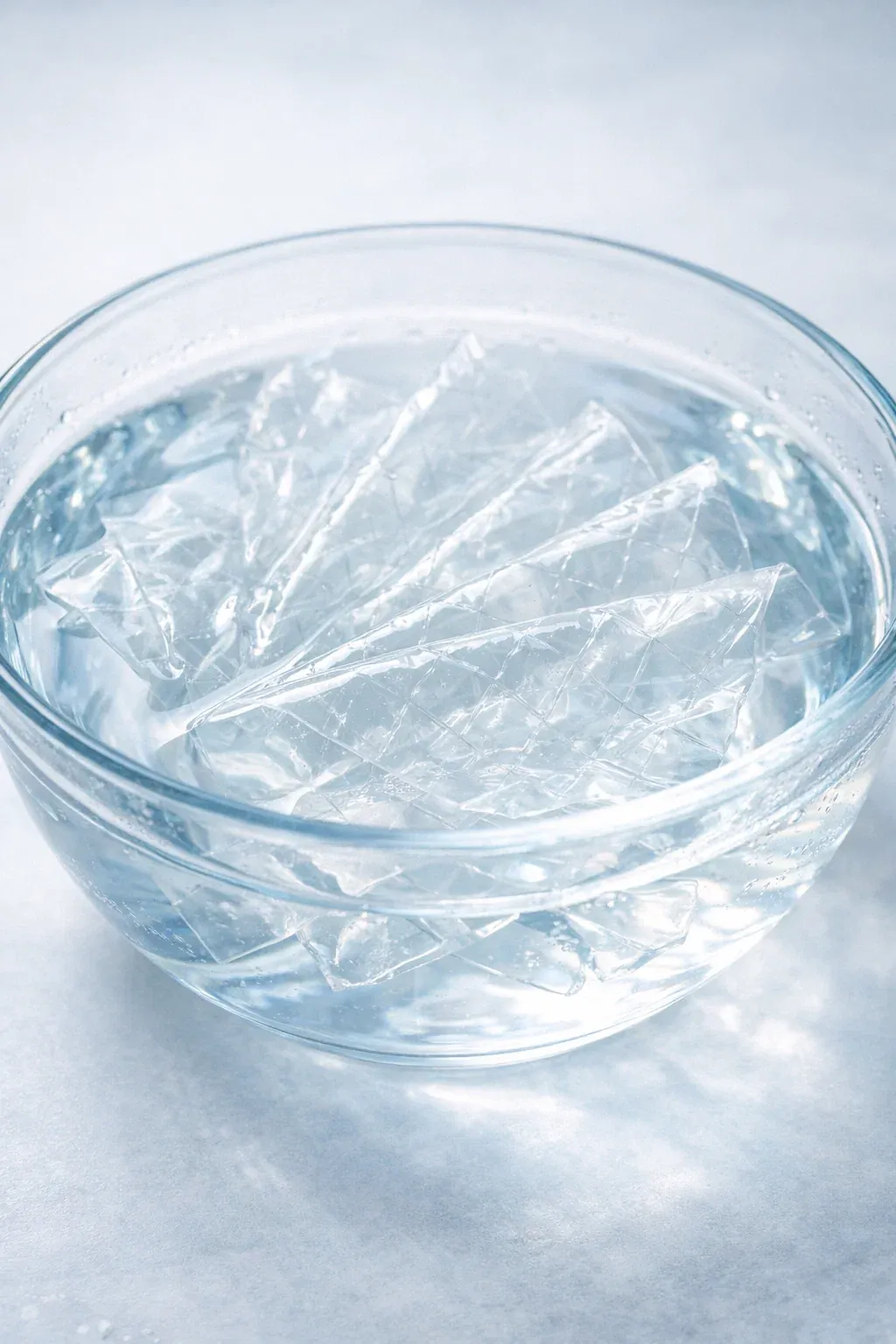
If a recipe contains no extra liquid, you can gently melt the squeezed sheets by themselves in a small bowl set over a warm water bath, then stir that into your mixture. This method is unique to leaves and is noted in the gelatin industry FAQ. Powder cannot be handled this way because it must bloom in liquid first.
Conversions and Measuring
Gelatin strength can vary by brand and bloom rating, so treat conversions as a starting point. Then adjust by weight and taste for your preferred set.
9 g Powder Equals 6 Leaves
The most practical home conversion is this: for 500 ml of liquid, 9 g powdered gelatin equals 6 standard leaves. That yields a pleasant, medium set that slices cleanly but still wobbles. If you want softer or firmer textures, use the ratios in this gelatin ratio per 500 ml guide.
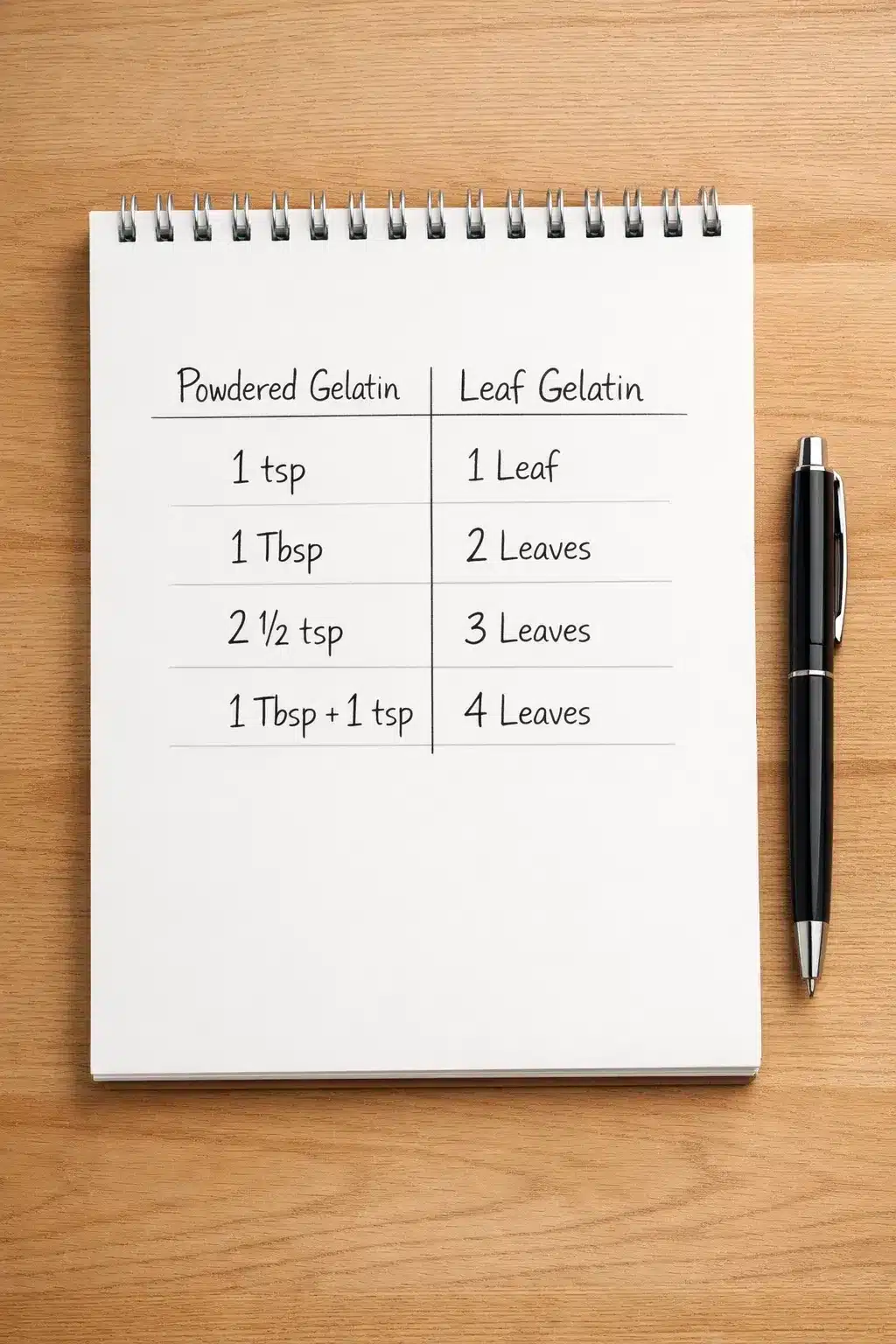
This rule of thumb also helps when a recipe is written the other way. If it calls for 6 leaves, you can swap in 9 g of powder. That is the quick path for gelatin leaves to powder conversions in everyday cooking.
Why Weighing Helps
Not all 6 leaves weigh the same. Brands make sheets in different sizes and bloom strengths (often labeled bronze, silver, gold, or platinum). Higher bloom sheets are stronger, so you need less mass for the same set. Powder varies too, though it is sold in more predictable packages.
Because of that, weighing improves accuracy. Weigh the powder, or check the package for sheet weight and aim for the same total grams from leaves. Also, read labels to understand source and processing, especially for dietary needs; this overview of gelatin sources explains what to look for.
When to Choose Each
Both forms make beautiful desserts. The better choice depends on your workflow, tools, and the character of the dish.
Portioning vs Convenience
- Choose sheets when you portion by count. They are easy to split or trim if you need half a leaf. That helps when testing a small batch of panna cotta or stabilizing whipped cream without a scale.
- Choose powder when you measure by grams. It shines in big-batch production, recipe testing, and consistent, repeatable results. Powder is also simpler to store and measure accurately by weight.
- Pick sheets for recipes with minimal added liquid, like some chocolate glazes. You can melt softened leaves without extra water in a warm water bath, which keeps the formula tight.
- Pick powder for mixes that already include a bloom liquid, like fruit puree or milk. You will bloom directly in that liquid and dissolve smoothly.
- If you need a vegetarian alternative, review these practical gelatin substitutes. Different hydrocolloids gel in different ways, so match the function to your recipe.
In short, it is not gelatin sheets vs powder as a contest. It is which format best fits your timing, your tools, and your desired texture.
Troubleshooting
Clumps and Overheating
Clumps happen when powder is dumped in a pile or stirred too soon. To prevent them, always sprinkle evenly over cold liquid, let it hydrate for 5 minutes, and then stir. If you still see lumps after warming, take the pan off heat, stir to dissolve, and strain through a fine mesh.
Leaf gelatin can clump if sheets overlap tightly in the soaking bowl. Fan them out and use plenty of cold water. After soaking, squeeze them well. If bits remain unmelted, return the pot to low heat, stir gently, and finish dissolving.
Overheating weakens gelatin. Avoid boiling, and keep the solution hot enough to dissolve but below a simmer. If you accidentally boil, the set may be soft or fail entirely. To save a batch, cool it slightly, then dissolve a small supplemental amount of gelatin separately and blend it in. Always test with a chilled spoon to gauge the final set.
- Quick conversion checklist for 500 ml: 9 g powder = 6 standard leaves for a medium set.
- Powdered gelatin instructions: bloom 5 minutes in cold liquid, then dissolve on low heat.
- Leaf gelatin instructions: soak 5 minutes in cold water, squeeze, then melt into warm liquid.
- Only leaves can be melted without extra liquid in a gentle water bath.
- Weigh when possible, since bloom strength and brand affect firmness.
FAQ
Is leaf gelatin stronger than powdered gelatin?
Strength depends on bloom and brand. Use weight-based conversions for consistent results.
How do I convert leaf gelatin to powder?
A common rule of thumb is 6 leaves for 500 ml of liquid, equivalent to 9 g powder.
Do leaf gelatin sheets need a water ratio?
No. Sheets are soaked in plenty of cold water until soft, then squeezed out.
Can I dissolve leaf gelatin without extra liquid?
Yes. If a recipe has no liquid, soaked sheets can be melted gently in a water bath.
Can powdered gelatin dissolve without liquid?
No. Powdered gelatin must be bloomed in liquid before dissolving.
Conclusion
Now you know how to bloom, dissolve, and convert leaf gelatin vs powder for reliable, silky sets. Keep the 9 g to 6 leaves rule for 500 ml in your back pocket, and weigh when you can. For more visual tips and project ideas, follow these Pinterest cooking tips.