
Gelatin ratio per 500ml is your key to silky, bouncy, and sliceable desserts that set just right. Get the ratio right, and your panna cotta quivers gently while a fruit jelly slices cleanly. Miss it, and you may end up with rubbery chew or a puddle that never firms. The good news? Reliable ratios and a few habits make success repeatable.
In this guide, you will learn trustworthy ratios for 500 ml in grams and sheet equivalents, plus how to convert, scale, and troubleshoot. We will cover softer custards with egg yolk, clear jellies, and firm molded creams. You will also see how to bloom in cold liquid, dissolve gently in warm liquid, and adjust for acids or alcohol.
Think of these ratios as a friendly baseline. Start here, then tweak to match your preferred texture and the ingredients on hand. With a little practice, you will choose your set like a pro.
Table of Contents
Why Ratios Matter
Gelatin ratio controls gel firmness, mouthfeel, and clarity. A small change in grams shifts texture from tender wobble to firm slice. Because gelatin forms a protein network, more gelatin means denser links and a stronger hold. Less gelatin means a softer, creamier spoonful.
Different desserts need different set strengths. A fruit jelly should be clean-cut and bouncy. A custard enriched with egg yolk already has body, so it needs less gelatin to hold shape. Meanwhile, a molded cream dessert needs enough structure to unmold neatly.
Bloom strength also matters. Brands vary in gelatin bloom strength, and that affects set strength. Standard ratios still work, but you may need slight adjustments. If you are new to the ingredient, read this primer on what is gelatin for forms, bloom, and handling basics.
Technique supports the ratio. Always bloom in cold liquid first, then dissolve gently in warm liquid. Overheating weakens the gel. For safe temperatures and timing, see our detailed gelatin temperature guide.
Soft vs Medium vs Firm Sets
Use the ratio to steer texture. Then adjust slightly to taste.
- Soft set: tender wobble for creamy desserts with egg yolk. Baseline 6 g per 500 ml.
- Medium set: bouncy, clear jellies. Baseline 9 g per 500 ml.
- Firm set: sliceable molded creams. Baseline 12 g per 500 ml.
These targets produce consistent, crowd-pleasing textures. You can lean softer or firmer by a gram or two. Keep notes on your preferred brand and bloom strength for even tighter control.
Standard Ratios for 500 ml
The following rule-of-thumb ratios are proven in both home and professional kitchens. They align with industry guidance and official dosage rules. For confirmation on powder and sheet amounts, see the official dosage rules.
Jellies
For clear fruit jellies and juice gels, use 9 g powdered gelatin for 500 ml liquid. This equals 6 standard leaves. The set is medium-firm with a pleasant bounce and clean slices. It also unmolds well from simple molds.
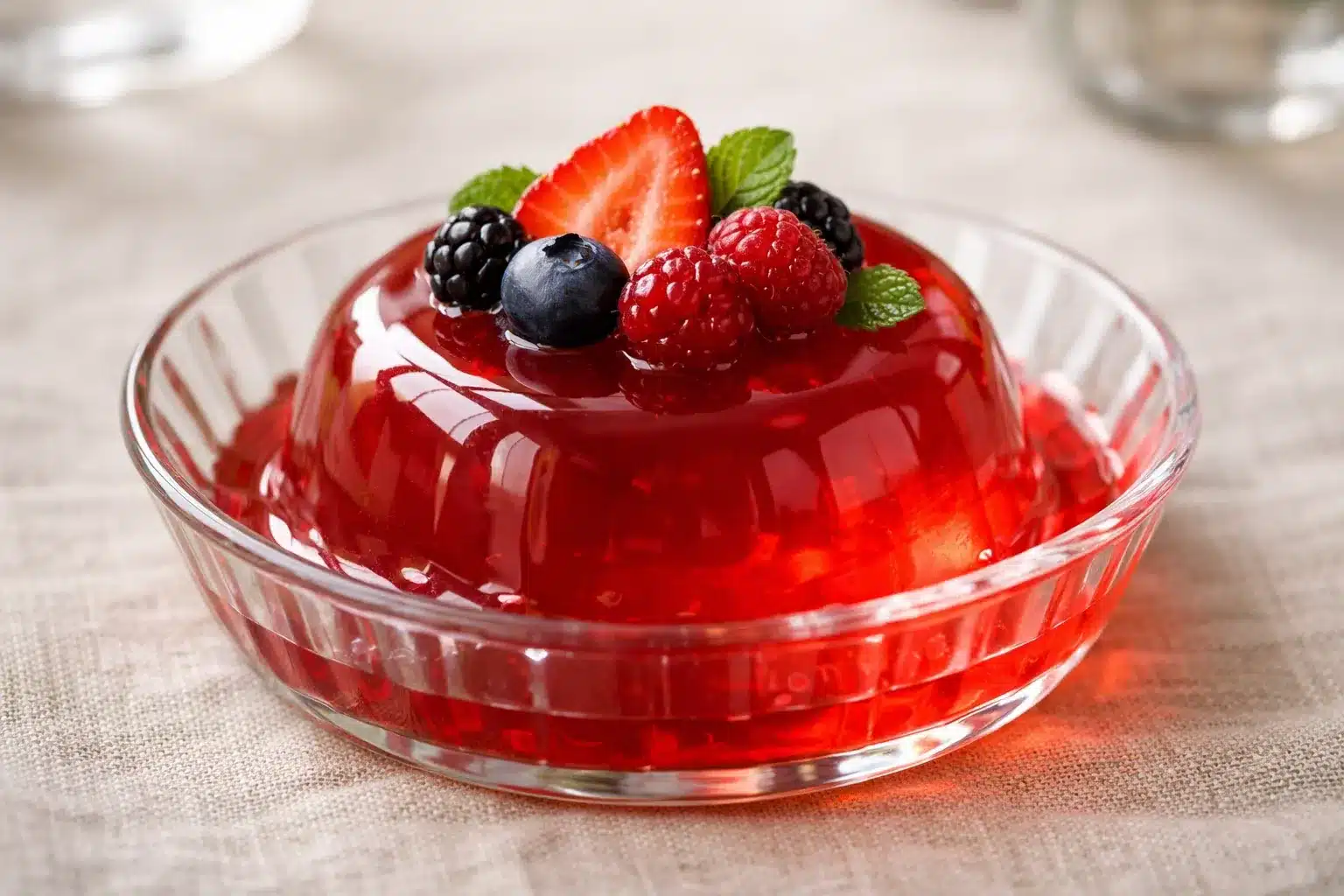
Bloom the powder in a small portion of cold juice or water first. Then warm the remaining liquid, combine, and dissolve gently. Avoid boiling. Plan for at least 3 to 4 hours of chill time for a full set.
In grams per liter, this is 18 g per liter. That number is useful when scaling for parties or buffet platters. If you prefer a softer, more delicate jelly, drop by about 1 g for 500 ml. If you want extra firmness for neat cubes, add 1 g.
Cream Desserts with Egg Yolk
Custards and creams enriched with egg yolk need less help to hold their shape. Use 6 g powdered gelatin for 500 ml dairy mixture, or 4 leaves. Expect a tender, wobbly spoon set with a silky finish. The texture should feel creamy, not chewy.
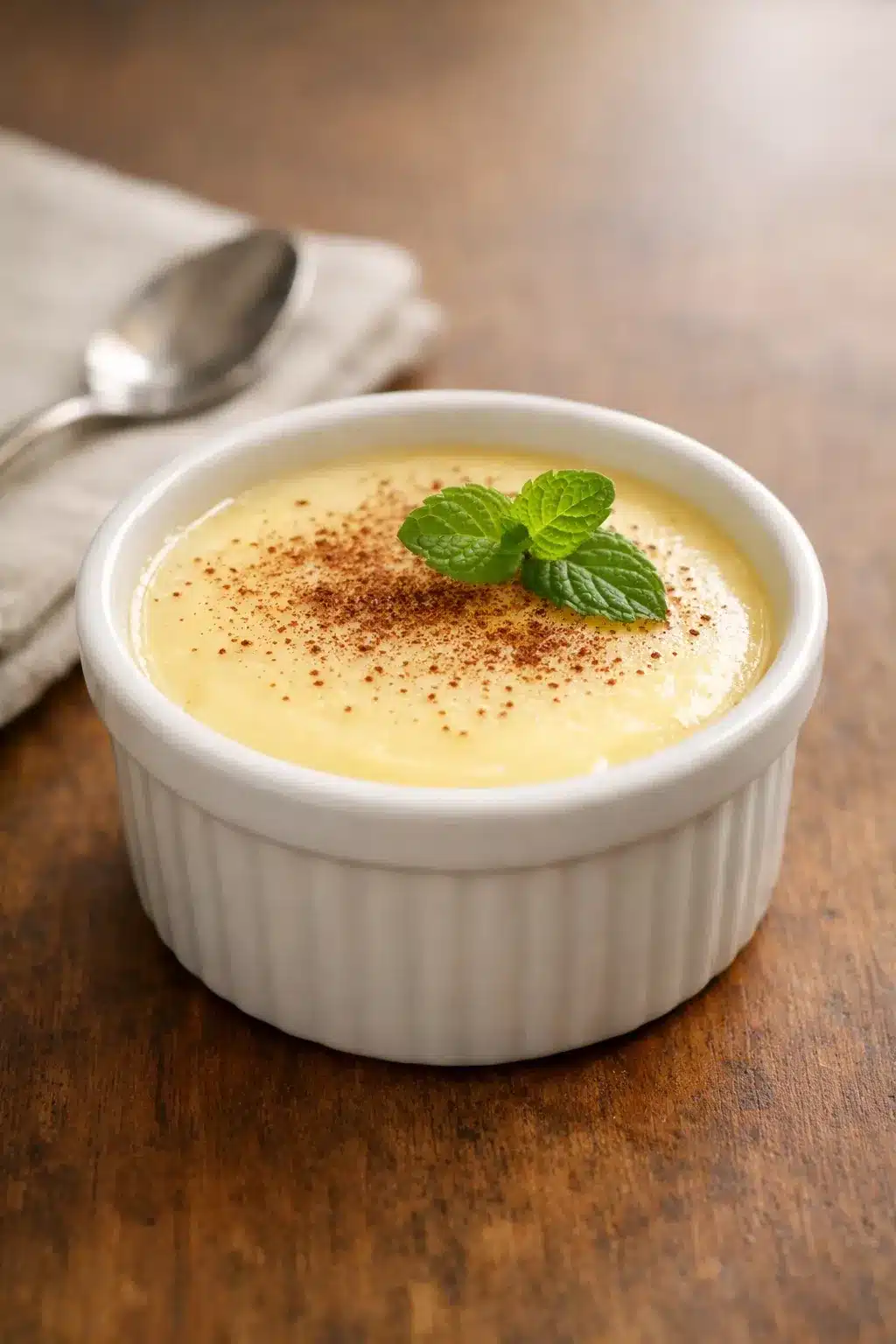
Cook your custard gently, temper the gelatin into the warm base, and strain for smoothness. Then chill until softly set. If you want an egg-free version with a similar silky result, try our vanilla panna cotta recipe.
Using grams per liter, this category targets 12 g per liter. That is a reliable starting point for dairy-forward spoon desserts with egg yolk.
Molded Cream Desserts
When you plan to unmold and slice, aim for extra structure. Use 12 g powdered gelatin for 500 ml dairy mixture, or 8 leaves. The result is firm yet creamy, perfect for elegant rings, charlottes, or layered cakes.
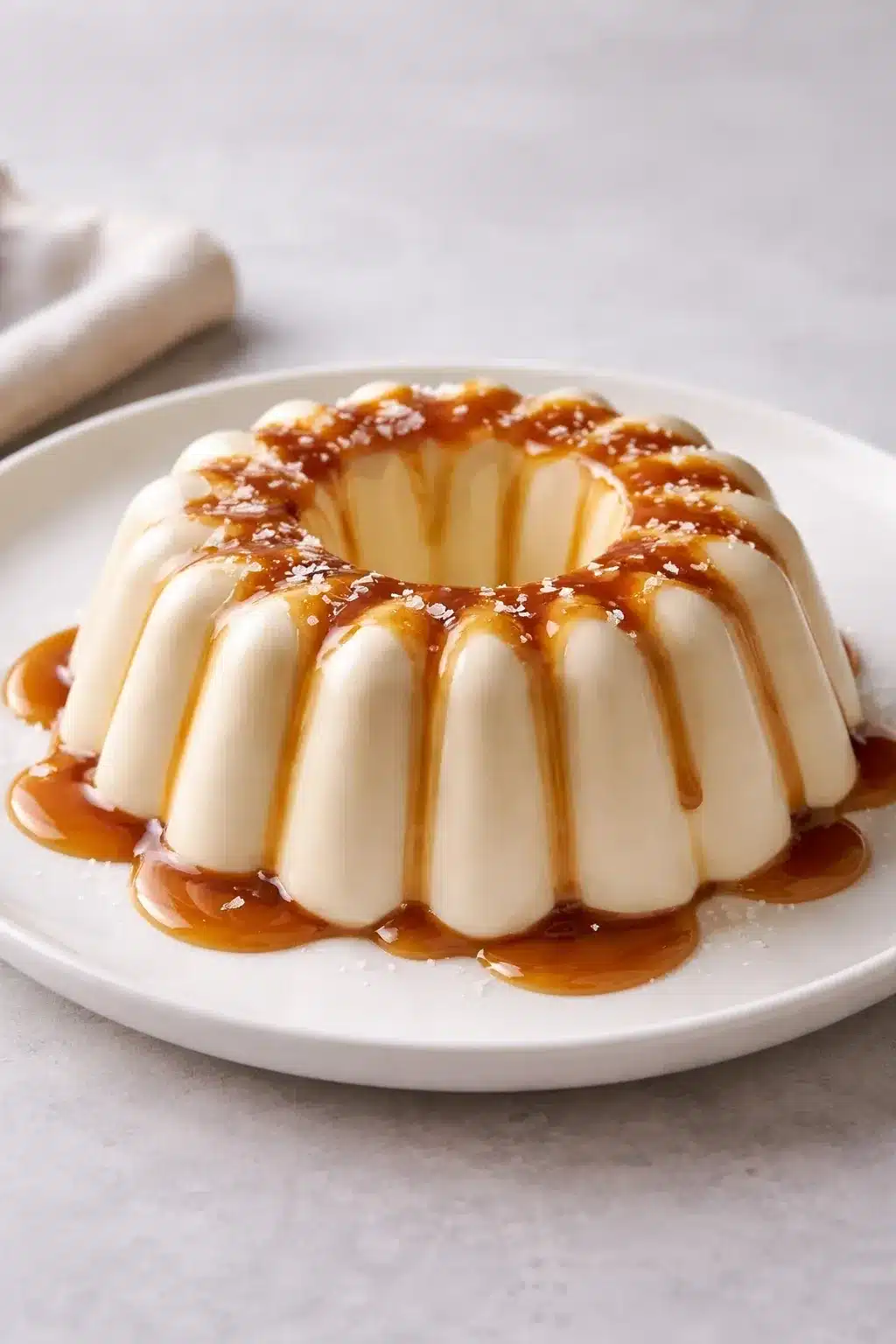
Heavy cream, chocolate, or sour cream add richness and weight. This ratio offsets that, giving a clean release from molds. Chill overnight for best results. For candy-like bounce, you will need much more. See our homemade gummy bears for a gummy-style set.
Leaf vs Powder Conversion
Powder and leaves are fully interchangeable when you weigh or convert correctly. Most standard gelatin sheets average about 1.5 g each, though brands can vary slightly. Bronze, silver, gold, and platinum leaves differ in bloom strength, not in the way you use them.
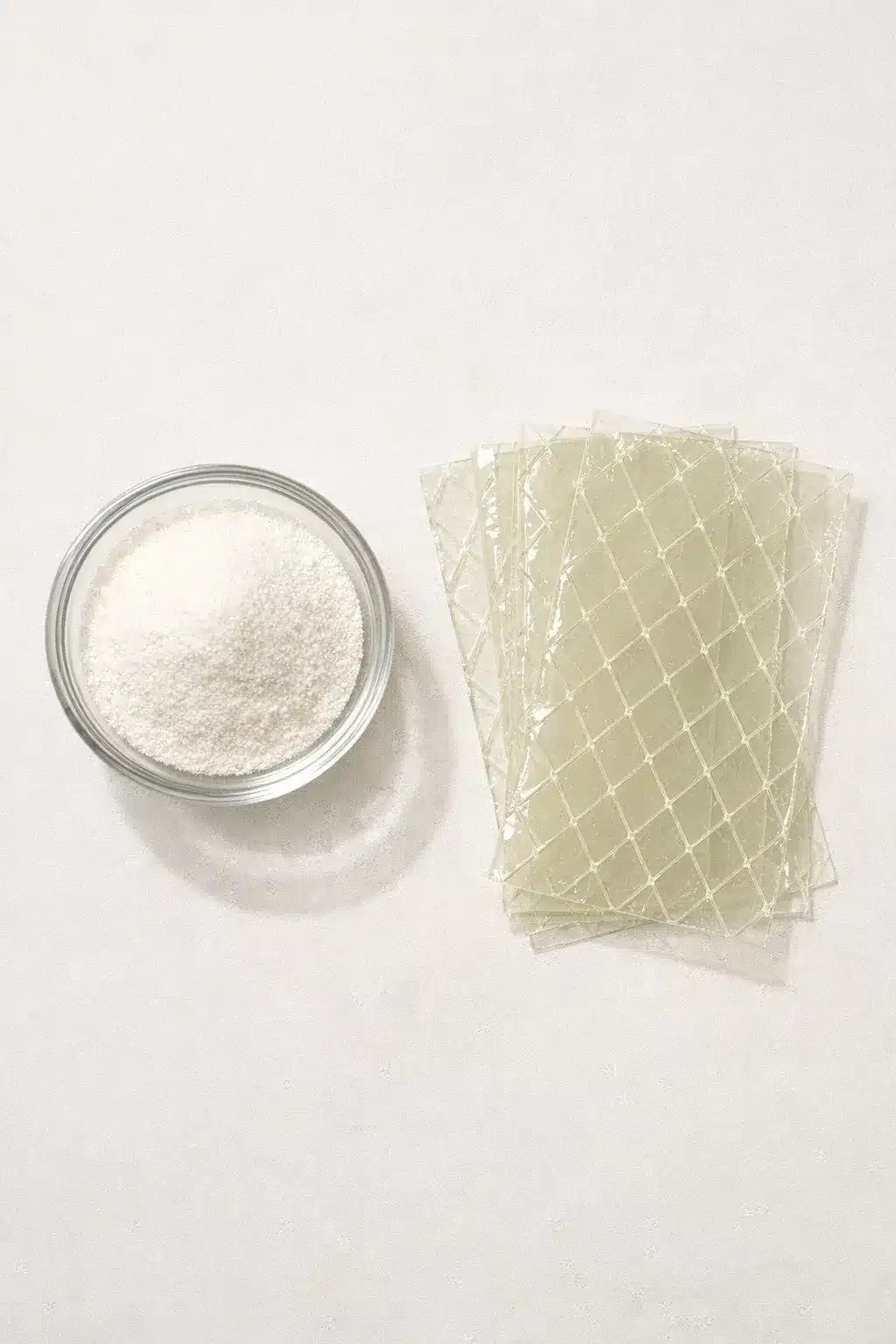
Because bloom strength varies by brand, your gelatin conversion may need a light trim or bump. Start with the baseline, then adjust by small increments. For more background on sheet equivalents, blooming, and standard ratios, the industry maintains a helpful gelatin FAQ.
9 g Powder Equals 6 Leaves
For 500 ml, 9 g powdered gelatin equals 6 leaves. That is the medium set for jellies. The same logic applies elsewhere: 6 g powder equals 4 leaves for egg-enriched creams, and 12 g equals 8 leaves for molded cream desserts.
- Jellies: 9 g powder = 6 leaves per 500 ml.
- Cream with egg yolk: 6 g powder = 4 leaves per 500 ml.
- Molded cream desserts: 12 g powder = 8 leaves per 500 ml.
If a package lists unusual leaf weights, weigh them once and note your brand. Then you can convert leaves to powder confidently every time.
Scaling for Other Volumes
Scale linearly. That means if you double the liquid, you double the gelatin. If you halve the liquid, you halve the gelatin. Simple math keeps your gelatin set strength consistent.
Think in grams per liter for fast math. The three baselines translate to 12 g, 18 g, and 24 g per liter respectively. Keep a small kitchen scale handy, because accurate grams make perfect gels.
500 ml to Cups
Five hundred milliliters equals about 2.1 cups. Use that figure to scale your gelatin per cup. One cup is roughly 237 ml, so you can compute grams quickly for any batch size.
- Jellies: about 4.3 g powder per cup, or a bit under 3 leaves.
- Cream with egg yolk: about 2.9 g powder per cup, close to 2 leaves.
- Molded cream desserts: about 5.8 g powder per cup, close to 4 leaves.
Round to the nearest half gram for convenience. Then keep notes on how your brand behaves. Small differences in bloom strength can nudge the firmness slightly.
Adjusting for Ingredients
Ingredients influence gel behavior. Fat from cream or chocolate softens the gel’s feel. Sugar tenderizes gels modestly, while high water content leans softer and wobbly. Knowing this, you can adjust grams by small amounts to hit your target.
Temperature also matters. Always bloom in cold, then melt in warm liquid. Do not boil. Overheating weakens the network and reduces set strength, no matter the ratio you use.
Acidic Juices or Alcohol
Acids and alcohol can weaken the set slightly. Citrus juices, sour cherries, and wine-based jellies may need a modest bump. Increase the ratio by 10 to 20 percent, or add extra chill time. For 500 ml of very tart juice, try 10 g instead of 9 g.
Alcohol above roughly 15 percent by volume reduces gel strength. You can cook off some alcohol or use a blend of juice and wine to reduce the load. Then chill longer. A small increase in gelatin grams plus patience usually solves the problem.
Fresh pineapple, kiwi, papaya, and mango contain enzymes that break down gelatin. Brief cooking disables those enzymes, allowing a normal set. If you use uncooked versions, expect a weak or failed set regardless of ratio.
Troubleshooting Texture
Texture issues happen, even with good ratios. When clumps, graininess, or weak sets appear, start with process. Check for proper bloom in cold liquid and a gentle dissolve. Also confirm your scale and measurements are accurate.
If you need a deeper dive into causes and fixes, visit our focused guide to gelatin troubleshooting. It covers clumps, graininess, enzyme pitfalls, and rescue strategies.
Too Soft or Too Firm
Too soft? Increase the gelatin slightly next time. Bump in small steps, about 1 g per 500 ml, until you like the texture. Allow full chill time before judging firmness. Many gels strengthen after several hours or overnight.
Too firm or rubbery? Reduce the gelatin by 1 g per 500 ml. Alternatively, add a little more liquid or whipped cream the next time. Aim for a clean slice that still melts on the palate.
Salvage option: gently rewarm a soft gel until melted, then whisk in a small amount of freshly bloomed gelatin. For a firm gel, rewarm and fold in a bit more base liquid or cream. Do not boil, and chill again completely.
- Quick ratio checklist:
- 500 ml jellies: 9 g powder or 6 leaves.
- 500 ml cream with egg yolk: 6 g powder or 4 leaves.
- 500 ml molded cream desserts: 12 g powder or 8 leaves.
- Scale linearly. 500 ml is about 2.1 cups.
- Bloom in cold, dissolve in warm, never boil.
- Acid or alcohol present? Add 10 to 20 percent and chill longer.
FAQ
How much gelatin do I need for 500 ml liquid?
A standard rule of thumb is 9 g powdered gelatin for 500 ml of liquid, equal to about 6 leaves.
How many gelatin sheets equal 9 g powder?
A typical rule of thumb is 6 leaves for 500 ml, equivalent to 9 g powdered gelatin.
Does cream or egg yolk change the ratio?
Yes. Industry guidance uses less gelatin for cream desserts with egg yolk and more for molded cream desserts.
Can I adjust the firmness?
Yes. Use the standard ratios as a baseline, then adjust in small increments to get a softer or firmer set.
Is bloom strength important for ratios?
Bloom strength indicates gel firmness; different blooms can require small adjustments in weight.
Can I scale the ratio for smaller or larger batches?
Yes. Scale linearly. 500 ml is about 2.1 cups, so adjust proportionally.
Conclusion
Use the right gelatin ratio per 500 ml, bloom and dissolve gently, then adjust grams to match your ingredients and taste. Keep your notes, and your sets will stay silky, bouncy, and dependable. For more inspiration and ratio tips, feel free to browse my Pinterest boards and save your favorite ideas.