
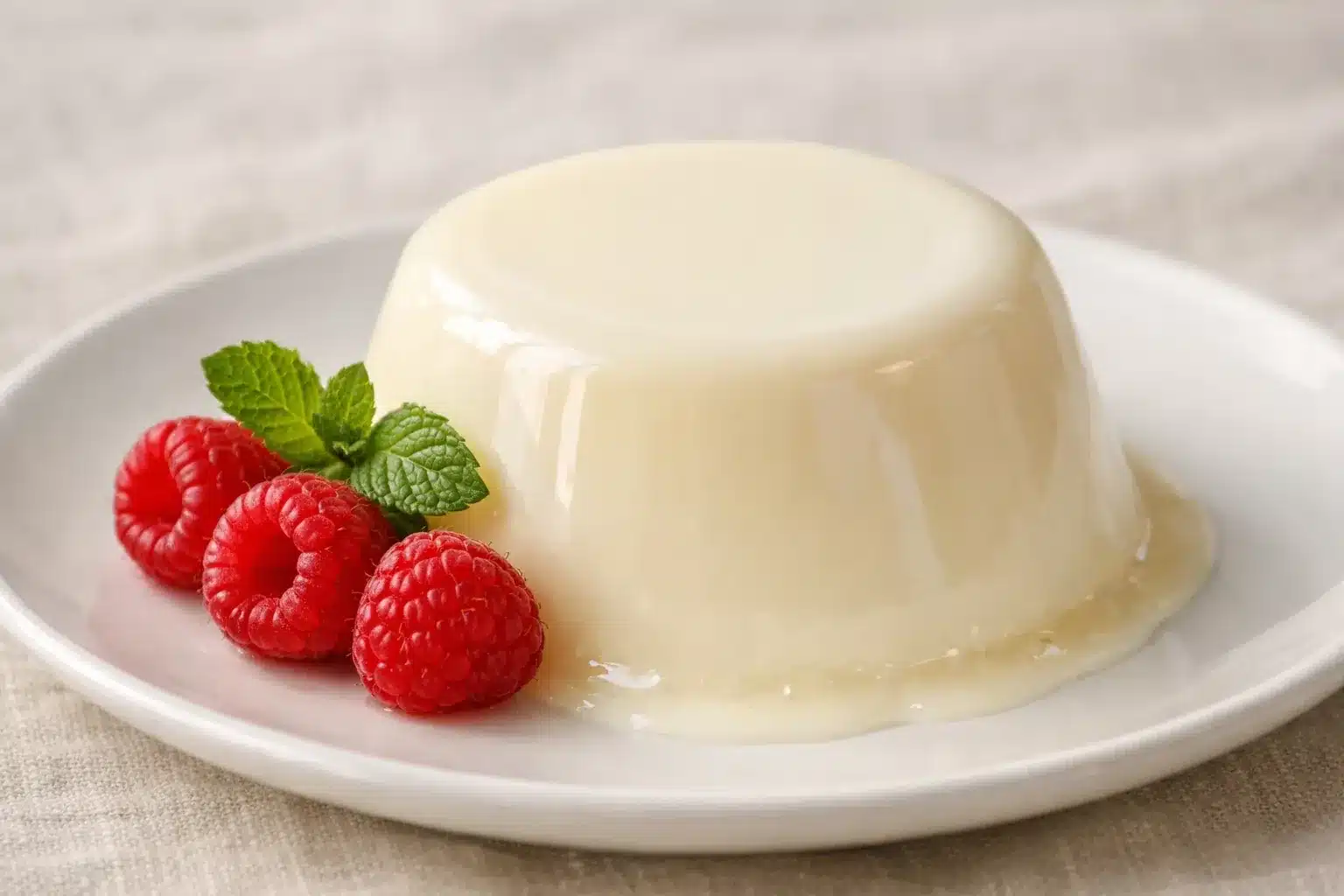
This gelatin temperature guide shows you how to turn liquids into silky, sliceable desserts with a clean, delicate wobble. When you understand heat, cold, and timing, your panna cottas unmold smoothly, your fruit gels hold sharp layers, and your mousses taste airy yet stable. You will avoid rubbery bites, stringy clumps, and weeping edges.
In the next sections, you will learn the key temperatures for dissolving, how to temper without lumps, and exactly how long to chill for a perfect set. You will also get a concise timing plan and a quick checklist you can follow every time. Keep this close, and your gelatin desserts will be consistent, elegant, and stress free.
Table of Contents
Temperature and Gelation Basics
Gelatin sets with time and cold temperatures, not at room temperature. After mixing, the network firms up only in the refrigerator, typically between 34-39°F (1-4°C). If you leave a gelatin dessert on the counter, it will remain fluid or very soft. Chill it properly, and the gel tightens and turns glossy with that classic tender bounce.
At a molecular level, hydrated gelatin strands cool, align, and form junctions that trap water. Warmer conditions loosen that network, while colder conditions encourage it to strengthen. Because of this reversible behavior, a dessert can soften slightly if it sits too long at warm room temperature, then firm again after a return to the fridge.
If you want a refresher on what gelatin actually is and how bloom strength works, see this clear primer on what is gelatin. Knowing the difference between powder and sheet forms helps you plan temperature and timing with confidence.
Why Cold Sets the Gel
Cold encourages the gelatin network to stabilize. As the liquid cools, proteins reconnect in a loose lattice that holds water in place. The colder environment supports more junction points, so the gel resists flow and feels softly springy on the tongue.
Meanwhile, warmth melts that structure, returning the dessert toward liquid. This is why you must rely on the refrigerator to finish the set. Plan for a full chill, since gelatin setting time depends on both concentration and temperature drop.
Dissolving Temperature
First, always hydrate powdered gelatin in cool water to bloom. Let it stand 5-10 minutes until spongy, so it dissolves evenly later. If using leaf gelatin, soak sheets in cold water for about 5-10 minutes, then gently squeeze out excess water before dissolving.
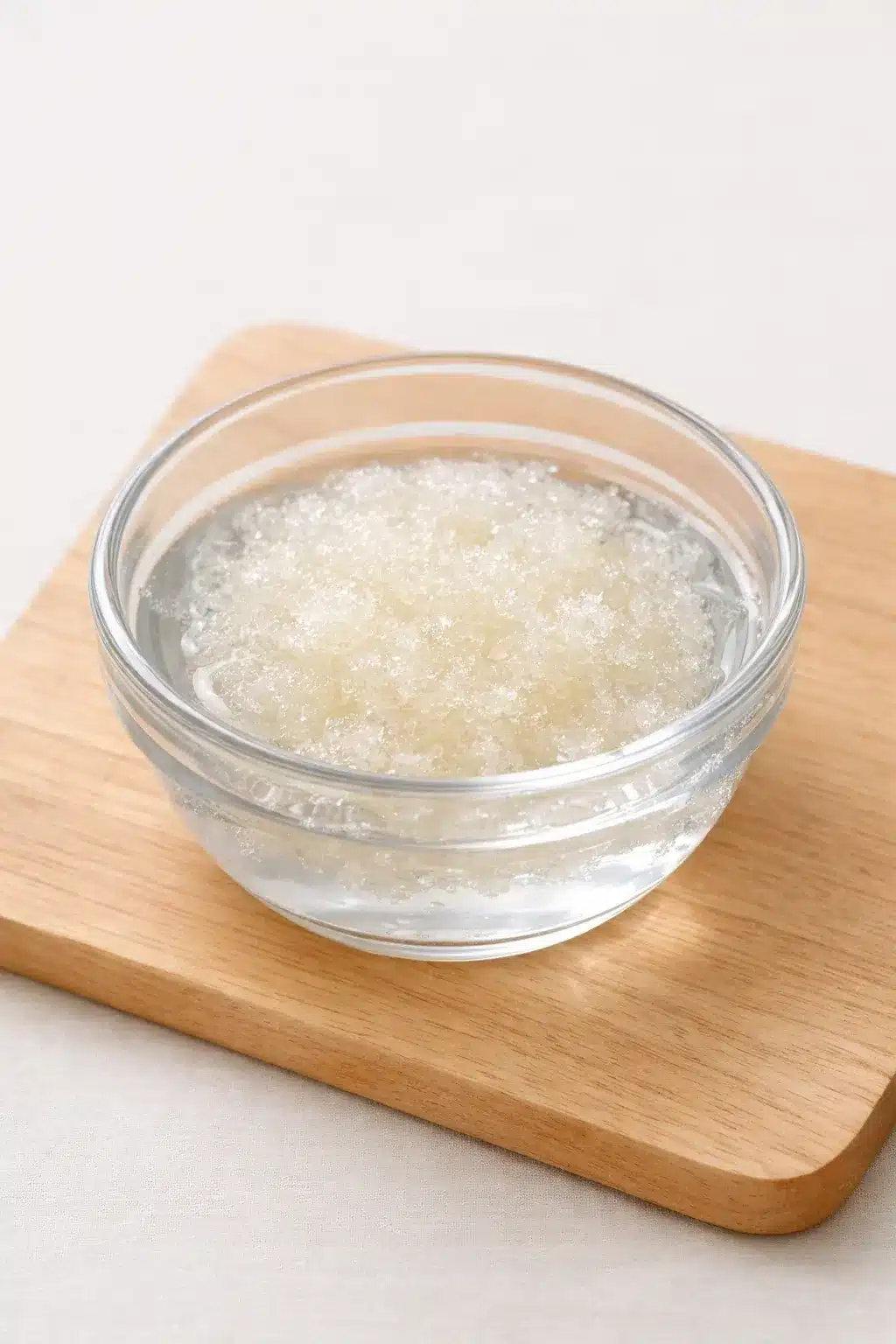
Next, dissolve the bloomed gelatin in warm liquid, not hot. Aim for gentle heat, roughly 120-140°F (50-60°C). This range melts and disperses the gelatin without reducing its strength. Stir slowly until fully fluid and clear. If you see tiny undissolved grains, keep the heat low and stir a bit longer.
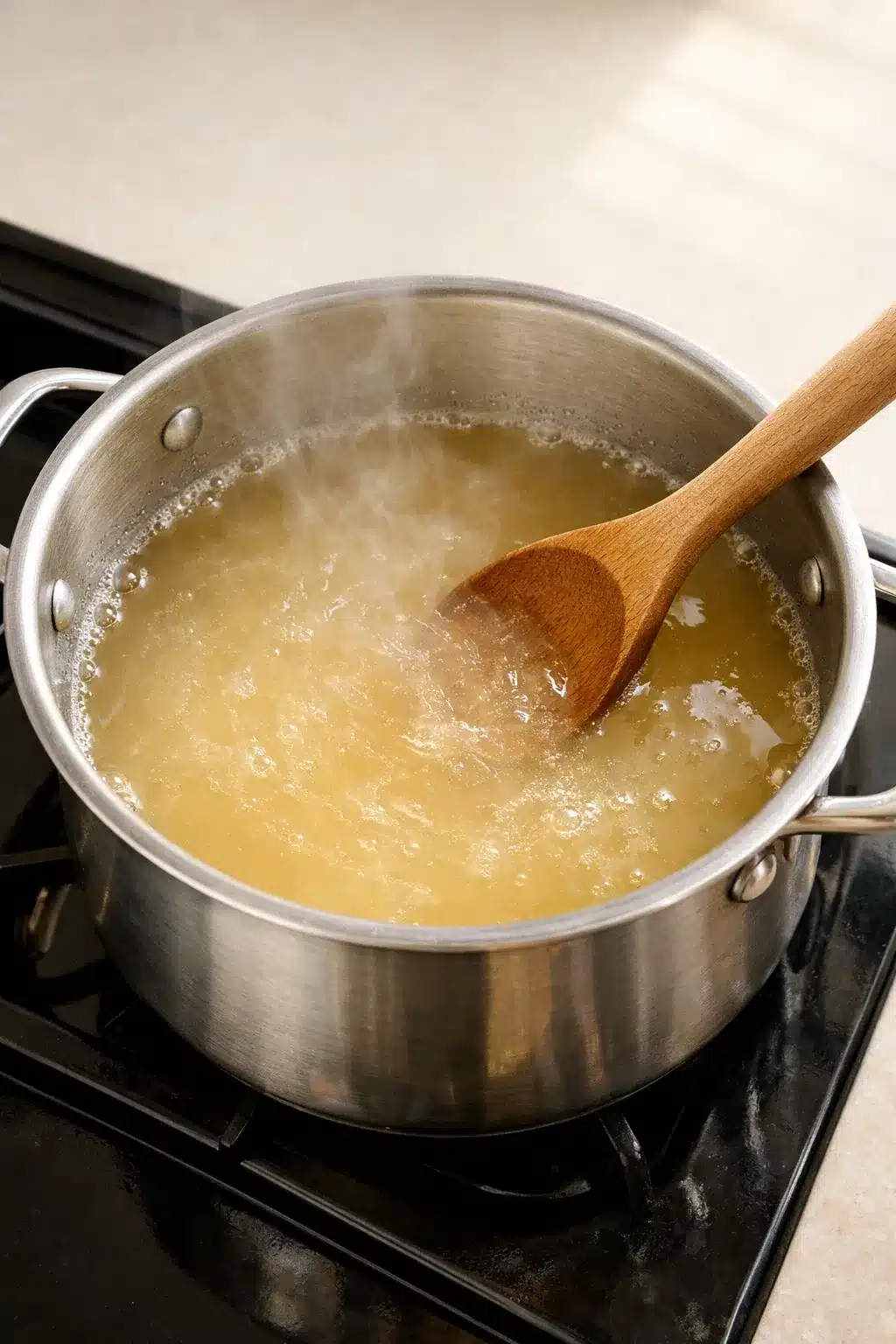
Warm Liquid, No Boil
Do not boil gelatin. High heat can weaken gelling power and lead to a soft or weepy set. Keep the pot steamy but not vigorously simmering, and remove from heat as soon as the gelatin melts smoothly.
For authoritative guidance, review the industry notes in the gelatin industry FAQ, which reinforce gentle heating and proper chilling. These reminders protect structure and preserve flavor, especially in delicate dairy desserts.
Mixing Temperatures
Temperature differences cause clumps, strings, and uneven setting. If you pour very warm gelatin into an icy base, the proteins can seize on contact and form rubbery threads. Likewise, if your base is too warm, the gel may remain runny and take much longer to firm.
Match temperatures before you combine. Bring the two mixtures closer in temperature, then blend. This one step prevents most textural problems and keeps your final gel glossy and even.
For more professional pointers on heat management and avoiding clumps, see this concise temperature handling advice. You will notice how often tempering appears as the solution, because it works.
Tempering for Cold Bases
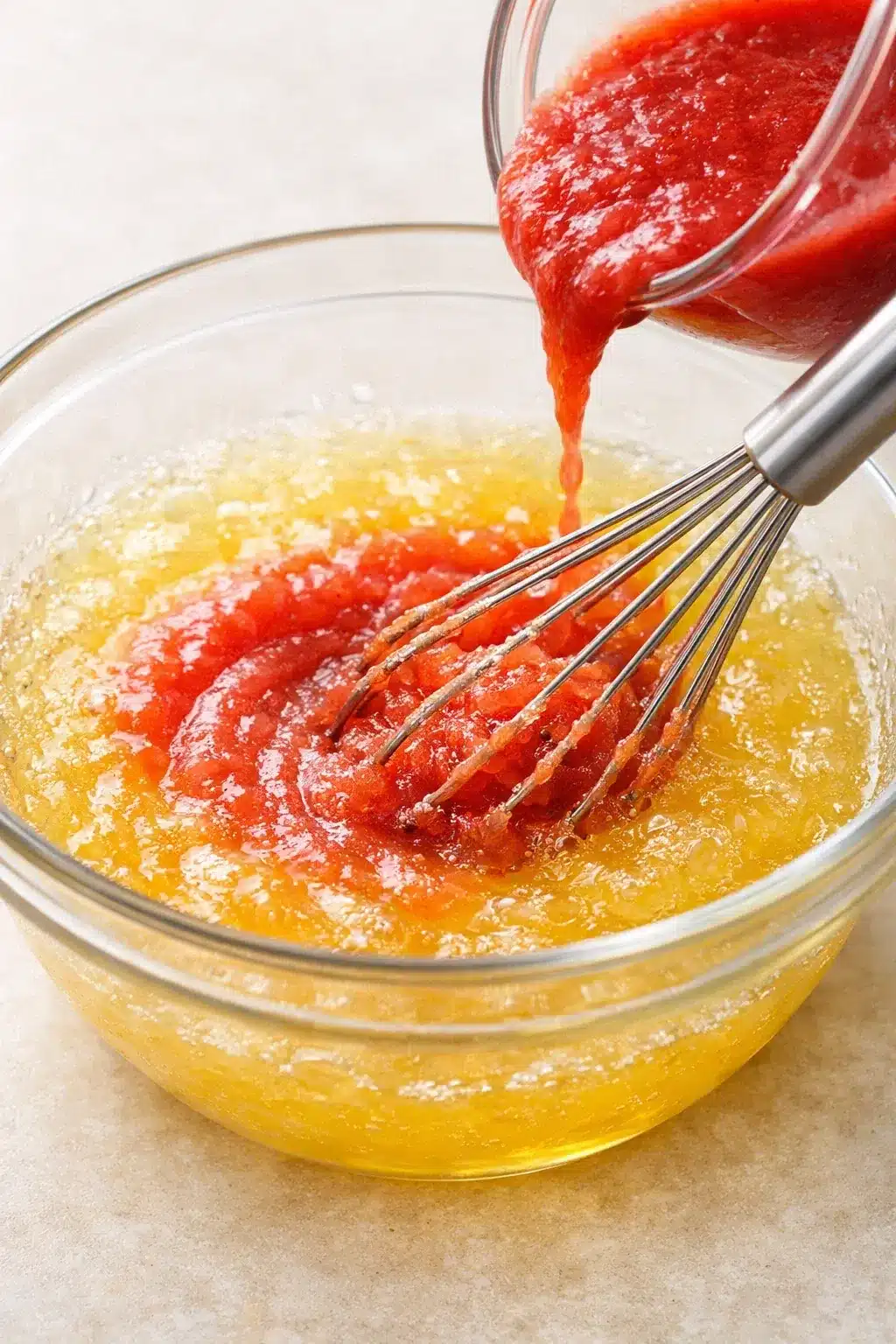
Tempering is simple and fast. First, take a few spoonfuls of your cold or cool base and whisk them into the warm, dissolved gelatin. This narrows the temperature gap safely.
Then, whisk that warmed portion back into the rest of the cold base in a thin stream. Work steadily, not aggressively, to avoid bubbles. If you still see fine strings, pass the mixture through a fine strainer while it is still fluid.
If you ever end up with stubborn clumps, do not panic. Review these practical gelatin troubleshooting tips for fixes and causes, including temperature mismatches and enzyme-rich fruits that block setting.
Setting Time
Gelatin timing depends on concentration, ingredients, and temperature. As a rule, small portions in shallow cups can set in about an hour. Creamy or higher-sugar desserts often need several hours because fat and sugar slow the network formation. Always plan enough gelatin chilling time so the center is fully firmed, not just the edges.
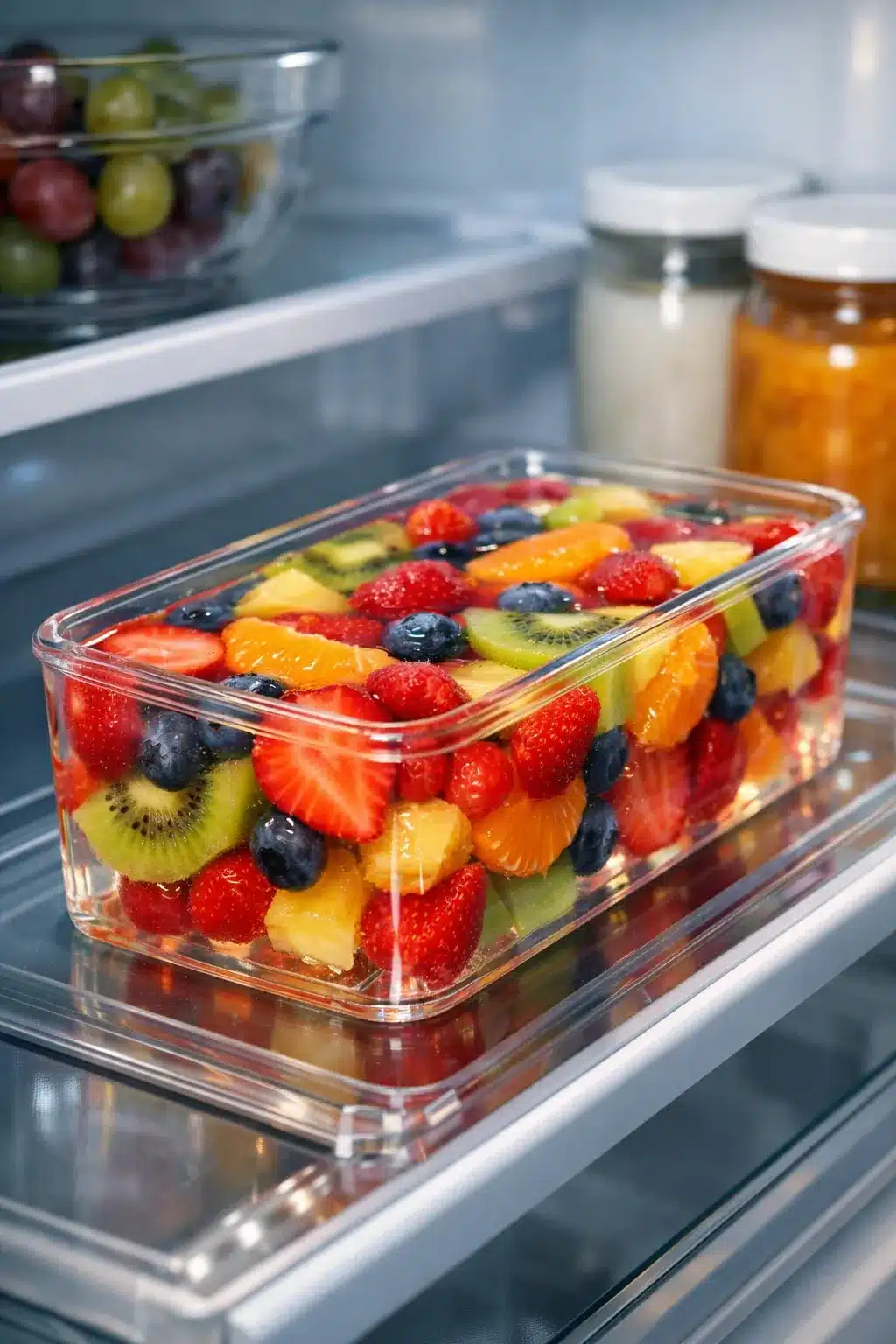
The refrigerator must be cold for reliable results. Do not rely on room temperature to set a gel. You can briefly rest a warm mixture on the counter to release bubbles, but the actual firmness happens only once it chills. If your fridge runs warm, setting may take significantly longer.
Gelatin concentration also plays a role. Softer gels use less gelatin, while firm, sliceable terrines use more. For conversion help with powder and leaf types, bookmark this handy gelatin ratio per 500 ml. Pairing the right ratio with a cold fridge turns guesswork into a plan.
Short timing plan
- Bloom: Hydrate gelatin in cold water for 5-10 minutes.
- Dissolve: Warm gently to about 120-140°F (50-60°C) until fluid and clear.
- Temper: Whisk in spoonfuls of the cold base, then combine fully.
- Chill: Refrigerate until set – from about 1 hour for thin layers to several hours for creamy desserts or large molds.
Quick checklist for safe temperature handling
- Never boil gelatin – it can lose strength.
- Always temper warm gelatin into cooler bases.
- Use a cold refrigerator, around 34-39°F (1-4°C).
- Do not freeze to speed setting – plan time instead.
- Strain mixtures if you see fine strings.
- Mind warm rooms – serve chilled or keep on ice if needed.
Small vs Large Batches
Small cups, thin sheets, and narrow layers chill fast. With adequate gelatin and a cold fridge, expect roughly 45-90 minutes to reach a light jiggle. Always test the center by nudging the container. If it ripples loosely, keep chilling.
Large molds, loaf pans, and cream-rich desserts need patience. Dense creams hold heat longer and contain fat that slows coagulation, so plan on several hours or overnight for best texture. A classic example is vanilla panna cotta, which rewards a slow, thorough chill with a silky finish.
Layered desserts demand staged timing. Let each layer set just enough to support the next without blending, typically 20-40 minutes for thin layers, longer for thicker ones. Then pour the next layer carefully down a spoon so it floats instead of punching through.
Freezing and Texture
Freezing is not a shortcut for gelatin timing. Ice crystals disrupt the gel network and squeeze out liquid as the dessert thaws. The result can be crumbly, grainy, or weepy instead of smooth. If you are in a rush, chill smaller portions in shallow vessels, which set faster without damage.
Also consider your fridge’s behavior. Crowded shelves or frequent door openings raise temperature and extend setting time. Place gelatin desserts toward the back, where the air stays cold and stable, and avoid warm spots near the door or lights.
Why Freezing Can Turn Crumbly
Gelatin holds water in a delicate matrix. When frozen, water forms sharp crystals that puncture that matrix. On thawing, the broken network releases moisture, leaving a fragile or watery texture.
This is why the best strategy is cold, steady refrigeration from the start. You will keep the gel’s fine, smooth structure intact, and the final dessert will slice cleanly rather than shatter.
FAQ
Does gelatin need cold temperatures to set?
Yes. Gelatin needs time and cold temperatures to set in the refrigerator.
Can I boil gelatin?
No. Boiling or overheating can reduce gelling power. Dissolve gently in warm liquid.
How long does gelatin take to set?
Small amounts may set in about an hour, while larger or cream-based desserts can take several hours.
Can I freeze gelatin to speed up setting?
Freezing can make gelatin crumbly. Chill in the refrigerator instead.
Why do I need to temper gelatin?
Tempering prevents clumps by bringing gelatin closer to the temperature of the cold mixture before combining.
Conclusion
Use this gelatin temperature guide as your roadmap: bloom, dissolve gently, temper, and chill. With steady refrigeration and thoughtful timing, your gels will be smooth and consistent every time. For more inspiration and visual ideas, explore my Pinterest dessert boards before you plan your next panna cotta or fruit gel.