
How to bloom gelatin is the tiny step that transforms grainy, rubbery desserts into silky, glass-clear gels. When you hydrate gelatin the right way, it dissolves evenly, sets reliably, and delivers a delicate, bouncy bite. You will taste the difference in panna cotta, mirror glaze, cheesecakes, and mousse.
In this guide, you will learn exactly when to use cold water, when to warm, and how to avoid clumps. We will cover powdered and sheet methods, the 500 ml ratio, conversions, tempering with cream, and the fruit enzymes that block setting. You will also get quick troubleshooting tips and a final checklist to guarantee smooth, consistent results every time.
Table of Contents
Blooming Basics
Blooming means hydrating gelatin in cold liquid so each granule or sheet swells and softens. This step helps the gelatin melt quickly later, without clumps or strings. Proper hydration is the key to how to dissolve gelatin cleanly, no matter the dessert style.
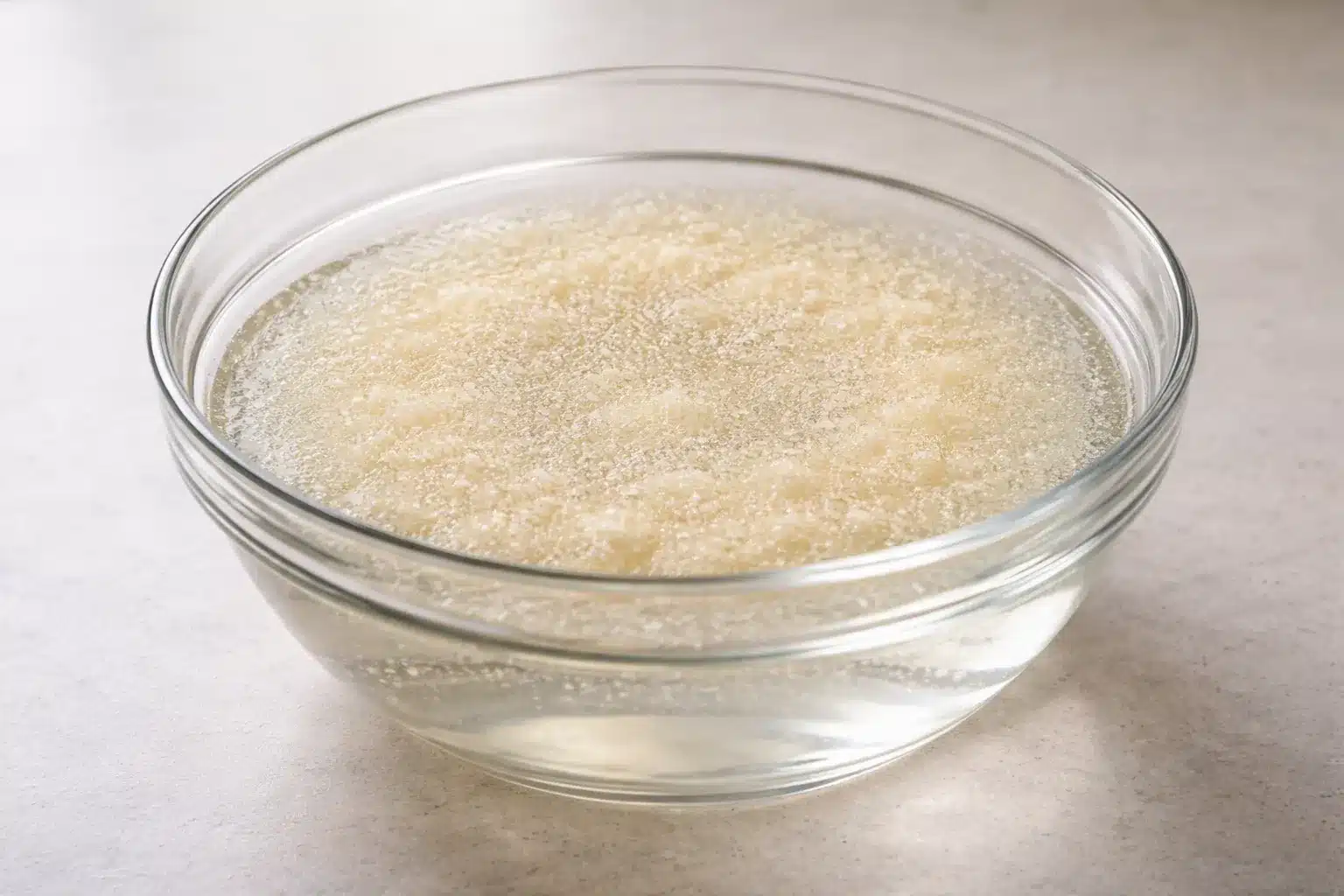
There are two common forms: powdered gelatin and sheet (leaf) gelatin. Both need cold water first, then gentle heat. If you want a quick refresher on what gelatin is and how bloom strength affects setting, review the basics before you start.
Most powdered or leaf gelatin hydrates in about 5 minutes. That short gelatin bloom time is enough to plump the granules or soften the sheets. For larger batches, allow up to 10 minutes, but do not let it sit so long that it dries on top.
Why Hydration Matters
Hydration lets water penetrate the gelatin network before heat is applied. Then the melted gelatin disperses evenly, so your gel sets uniformly without rubbery bits. Skipping this step often leads to gelatin clumps, a grainy mouthfeel, and weak or uneven sets.
For more on soaking times, dissolving guidance, and enzyme cautions, the official gelatin FAQ echoes the same core advice: hydrate cold, heat gently, and avoid boiling.
Powdered Gelatin Steps
Use these powdered gelatin instructions whenever a recipe calls for packets or loose granules. The flow is simple: sprinkle, bloom, then dissolve.
Sprinkle and Cover
Pour cold water or another cold liquid into a wide bowl or cup. Sprinkle the powdered gelatin evenly over the surface. Do not dump it in a pile. Let every granule touch liquid, and if needed, tap the container to help the powder sink. Avoid stirring yet.
You can bloom powdered gelatin directly in your recipe liquid, like cold juice or milk, as long as the surface is fully covered. This keeps flavors balanced and saves dishes. If the liquid does not fully cover the powder, add a little cold water until it does.
Bloom Time
Let the powder sit undisturbed for about 5 minutes, or until it looks swollen and spongy. That is your standard gelatin bloom time. For bigger amounts, wait up to 10 minutes. If you see dry spots, drizzle on a teaspoon of cold liquid to hydrate them.
Dissolve Gently
Warm the bloomed gelatin gently until it melts into a clear liquid. Use short microwave bursts on low power, or place the bowl over a pan of steaming, not boiling, water. Aim for warm, not hot. Boiling can weaken gelling power and cause a weak set.
If you like precise numbers, follow the cues in our gelatin temperature guide: around 120 to 140 F (50 to 60 C) dissolves gelatin smoothly. Stir gently until no granules remain, then proceed with your recipe.
Sheet Gelatin Steps
Leaf gelatin instructions are just as simple, but the texture cues look different. Instead of a sponge, you will feel soft, pliable sheets.
Soak and Squeeze
Slip the sheets, one by one, into a bowl of cold water. Make sure they can float freely and do not stick together. Soak for about 5 minutes, until the sheets are completely soft and floppy. Lift them out and squeeze firmly to remove excess water.
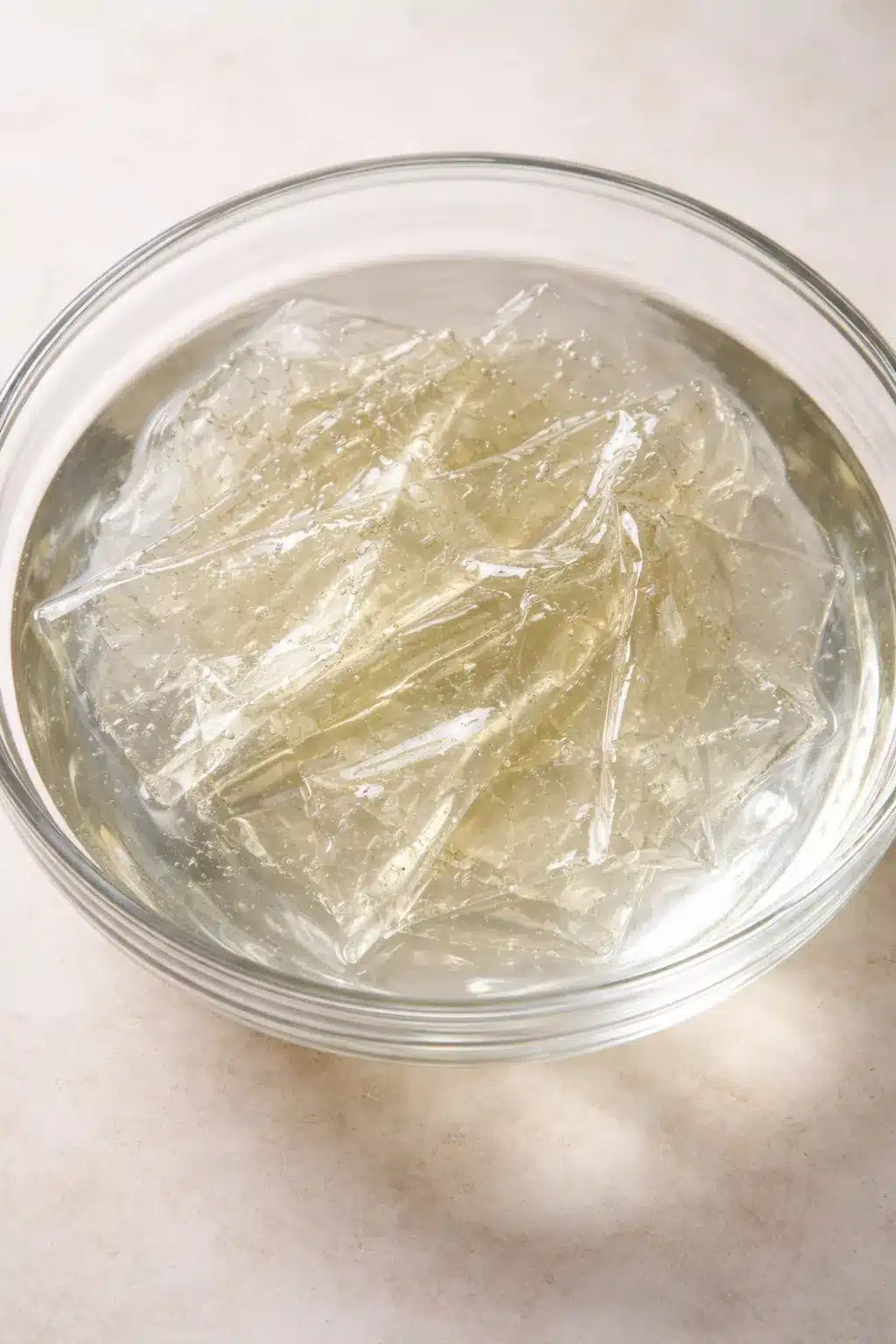
After squeezing, add the softened sheets to warm liquid to dissolve. You can cut or tear the sheets for faster melting. This method keeps flavors intact and works well when you want clean, clear gels.
Dissolve in Warm Liquid
Add the squeezed sheets to a warm base and stir until they disappear. As with powder, avoid boiling. If your recipe contains no extra liquid at this step, you can gently melt soaked leaf gelatin by itself using a water bath. That approach is a reliable alternative for sheets, but it does not work for powder. For reference, see guidance on dissolving leaf gelatin with controlled heat.
Tempering for Cold Mixtures
When your base is cold or air-filled, like whipped cream, you must temper. Tempering keeps melted gelatin from seizing into strings as it hits a cold mixture. You mix a small portion of the cold base into the warm gelatin first, then blend that back in.
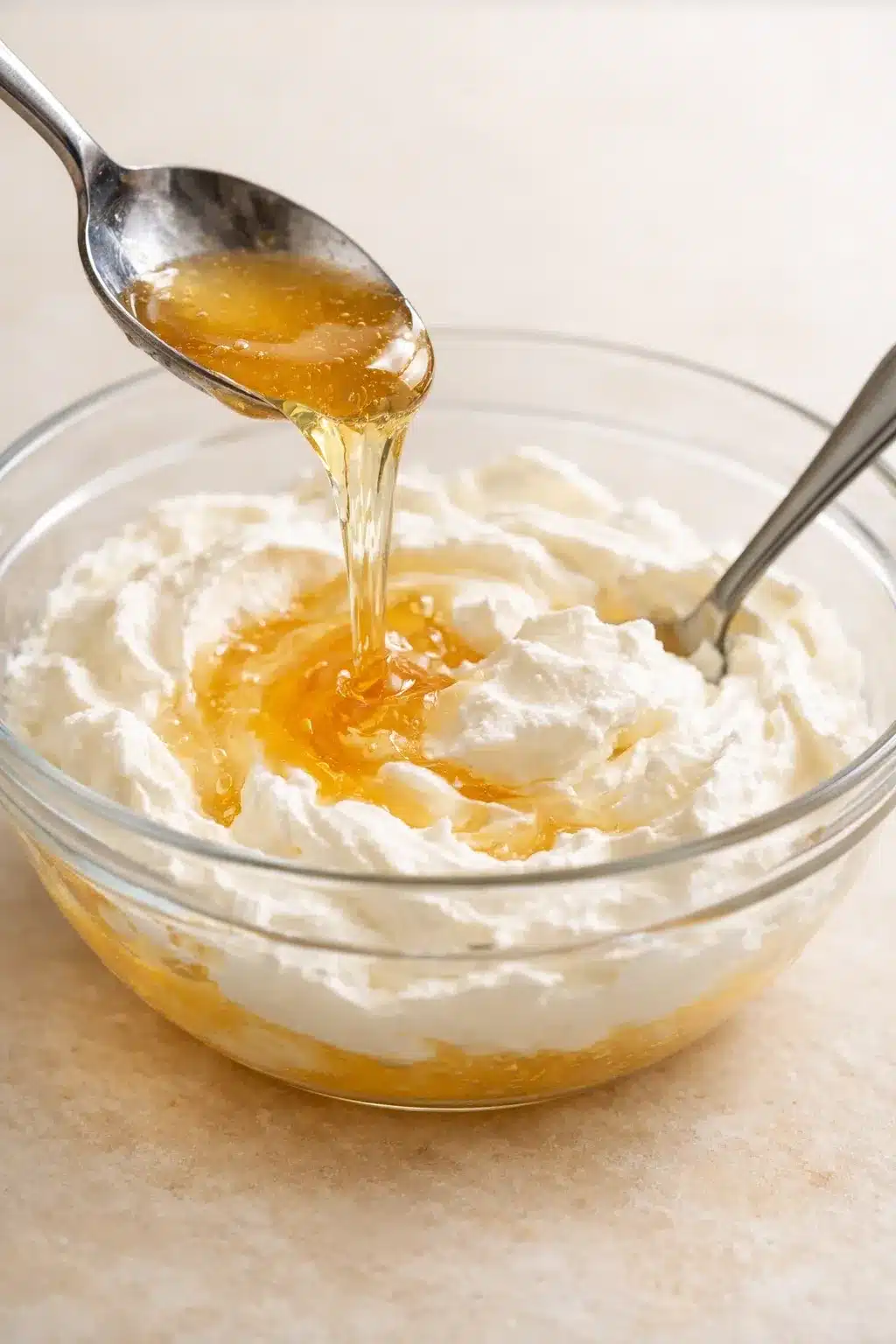
Start by cooling the dissolved gelatin until it is warm but not hot. Then whisk in a few spoonfuls of the cold base to equalize temperatures. Finally, stream the mixture back into the main bowl while whisking. This prevents clumps and keeps the final texture smooth.
Whipped Cream and Mousse
For stabilized whipped cream or mousse, bloom and dissolve the gelatin, then let it cool to lukewarm. Stir in a few spoonfuls of cream or puree to temper. While whisking, slowly pour the tempered gelatin into the rest of the cream or mousse base. Fold to finish, then chill until set.
This technique preserves volume and stops strings from forming. It is the easiest way to avoid gelatin clumps in light, chilled desserts.
Ratios and Conversions
Good texture starts with a solid gelatin ratio. The goal is a set that matches your dessert style, from tender panna cotta to sliceable terrine.
500 ml Rule of Thumb
A common rule for 500 ml (about 2 cups) of liquid is 9 g powdered gelatin or 6 standard gold-strength leaves. That yields a medium set that slices cleanly yet jiggles softly. Adjust up or down depending on the dessert and serving temperature.
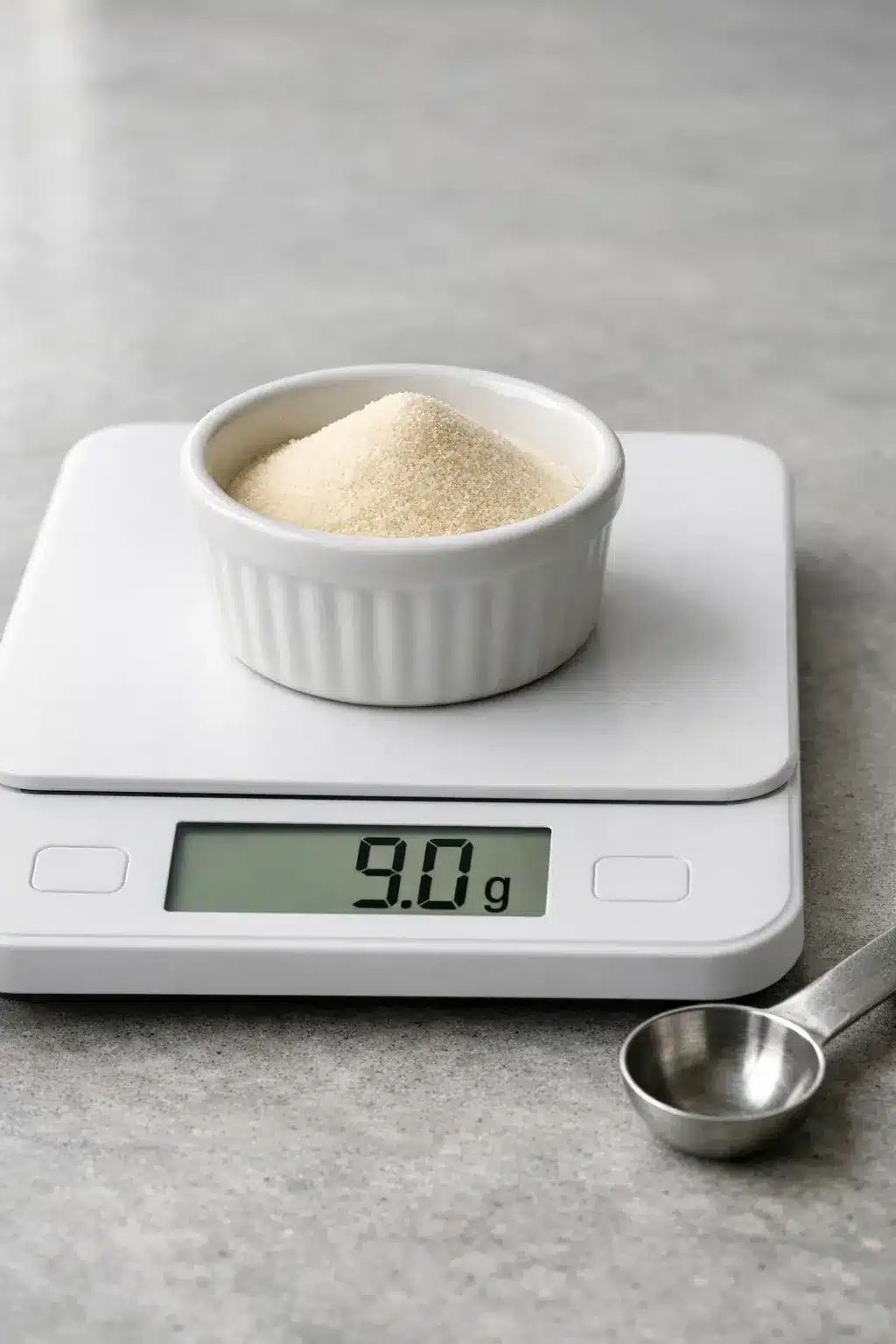
As a flexible guide: aim for 7 g powder or 4 to 5 leaves for a soft set, 9 g or 6 leaves for medium, and 11 to 12 g or 7 to 8 leaves for a firm, sliceable set. For more options and dessert-specific targets, use our gelatin ratio for 500 ml reference.
Powder to Sheet Conversion
Most gold-strength leaves weigh about 1.5 g each. That means 6 leaves are roughly equal to 9 g powder. If you have packets, one 7 g envelope equals about 4 to 5 leaves. Always check the leaf strength (bronze, silver, gold, platinum) and adjust slightly as needed.
If you switch between formats, think grams first, then convert. Weighing is more accurate than counting leaves or scooping powder, especially for large batches.
Troubleshooting
Even with a perfect bloom, gelatin needs time and cold temperatures to set. Most desserts need at least 2 to 4 hours in the fridge, or overnight for the cleanest slices. If your gelatin not setting problem appears, look to ratio, temperature, enzymes, and time.
Clumps and Grainy Texture
Clumps come from skipping the bloom, piling powder instead of sprinkling, or pouring a very cold base straight into hot gelatin. Overheating can also create strings and a rough texture.
To fix mild clumping, rewarm gently and whisk until smooth, then strain. For cold mixtures, always temper: add a few spoonfuls of the base to the gelatin first. If you keep having issues, our gelatin troubleshooting guide covers more causes and fixes.
Fruit Enzymes and Weak Set
Raw pineapple, kiwi, papaya, and figs contain enzymes that cut gelatin’s strands and prevent setting. Use cooked or canned versions of these fruits, which deactivate the enzymes. Citrus juice by itself is fine, but very acidic bases can weaken gels, so you may need a little more gelatin.
Weak set also comes from boiling, which damages gelling power. Keep the gelatin warm, not hot. If a dessert sets too softly, you can remelt it gently, bloom extra gelatin, dissolve, then whisk in and chill again. Alcohol-heavy mixtures may also need more gelatin or partial dilution for a stable set.
Quick bloom-and-dissolve checklist
- Measure first. Choose the right gelatin ratio for the texture you want.
- For powder: sprinkle over cold liquid until fully covered. Do not stir.
- For sheets: soak 5 minutes in cold water, then squeeze out excess.
- Bloom about 5 minutes, or until swollen and soft. Check for dry spots.
- Warm gently to dissolve. Avoid boiling to protect gelling strength.
- Temper warm gelatin with a few spoonfuls of cold base before mixing in.
- Chill long enough to set, usually 2 to 4 hours or overnight.
- Avoid raw kiwi, pineapple, papaya, and figs unless cooked or canned.
- If clumps appear, rewarm gently, whisk smooth, and strain.
FAQ
How long should gelatin bloom?
Most instructions recommend about 5 minutes for powder or sheets, or until fully hydrated and soft.
Can I bloom gelatin in juice or milk?
Yes. Powdered gelatin can be bloomed directly in the liquid it will be dissolved in, as long as the powder is fully covered.
What happens if I skip blooming?
Gelatin can clump and dissolve unevenly, which leads to grainy texture or weak set.
Do I have to boil gelatin to activate it?
No. Dissolve gelatin in warm liquid and avoid boiling to preserve gelling strength.
Can I dissolve leaf gelatin without extra liquid?
Yes. If the recipe has no liquid, you can melt soaked leaf gelatin gently in a water bath.
Why did my gelatin get lumpy?
Lumps usually happen when gelatin is not bloomed first or when cold mixtures are poured directly into melted gelatin.
How do I prevent clumps in whipped cream or mousse?
Temper the gelatin by stirring a few spoonfuls of the cold mixture into the dissolved gelatin, then mix back into the rest.
What is the standard gelatin ratio for 500 ml?
A common rule of thumb is 9 g powdered gelatin or 6 leaves for 500 ml of liquid, with adjustments based on dessert type.
Why will gelatin not set with pineapple or kiwi?
Raw pineapple, kiwi, papaya, and figs contain enzymes that interfere with gelling. Use cooked or canned fruit instead.
Conclusion
Master these steps and you will bloom gelatin with confidence, dissolve it cleanly, and set desserts that slice like a dream. For inspiration and reminders you can reference anytime, save these gelatin tips on Pinterest.